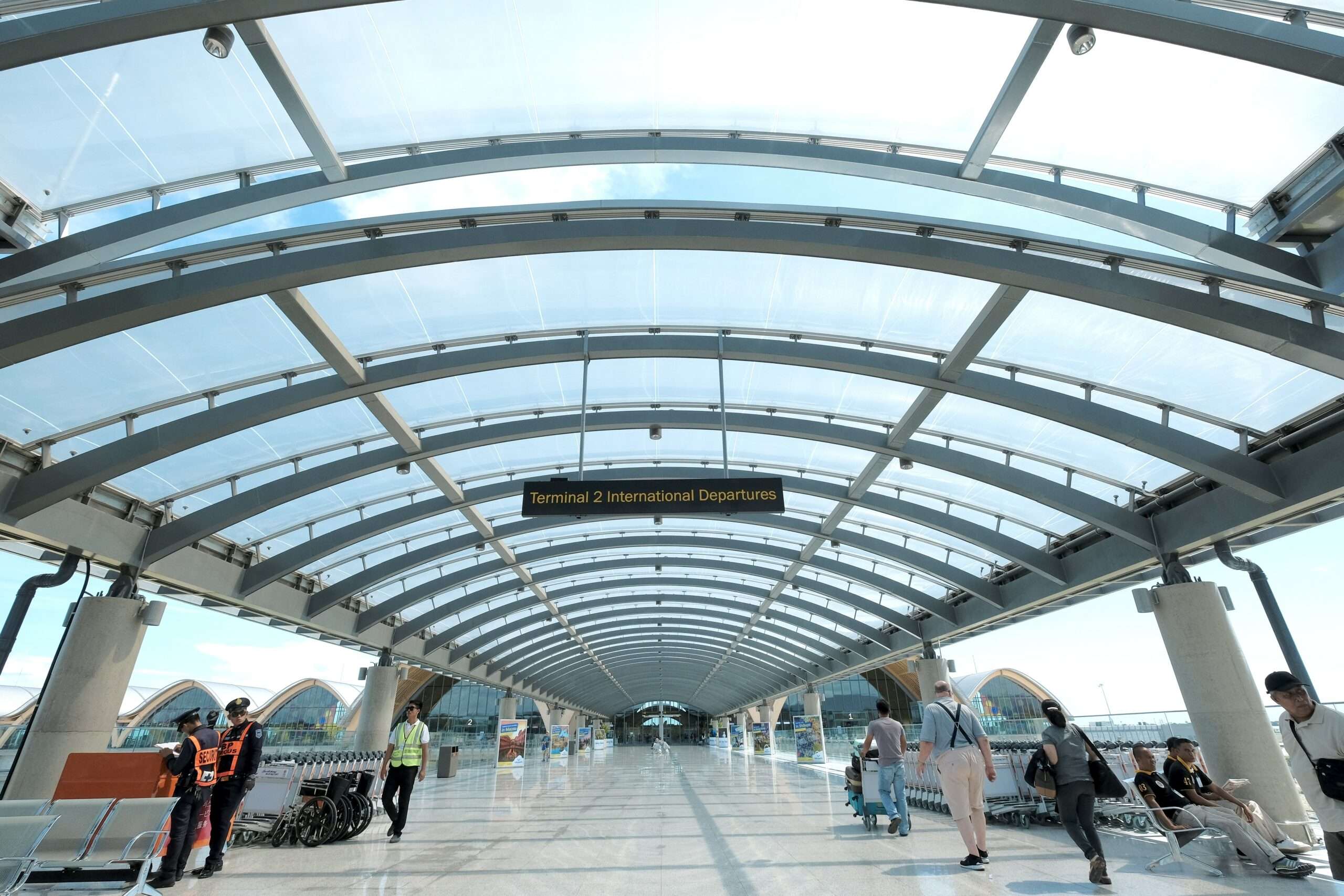
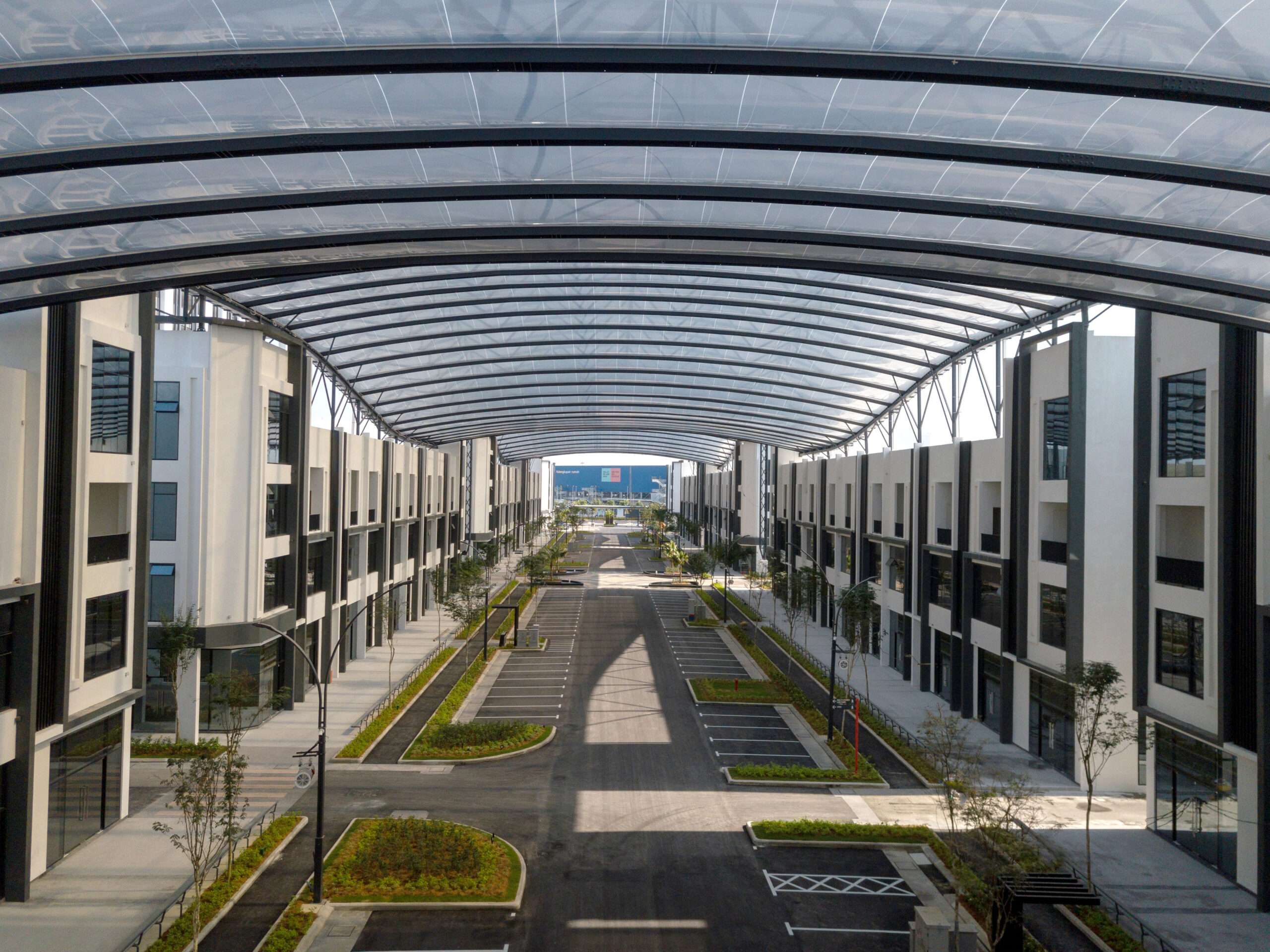
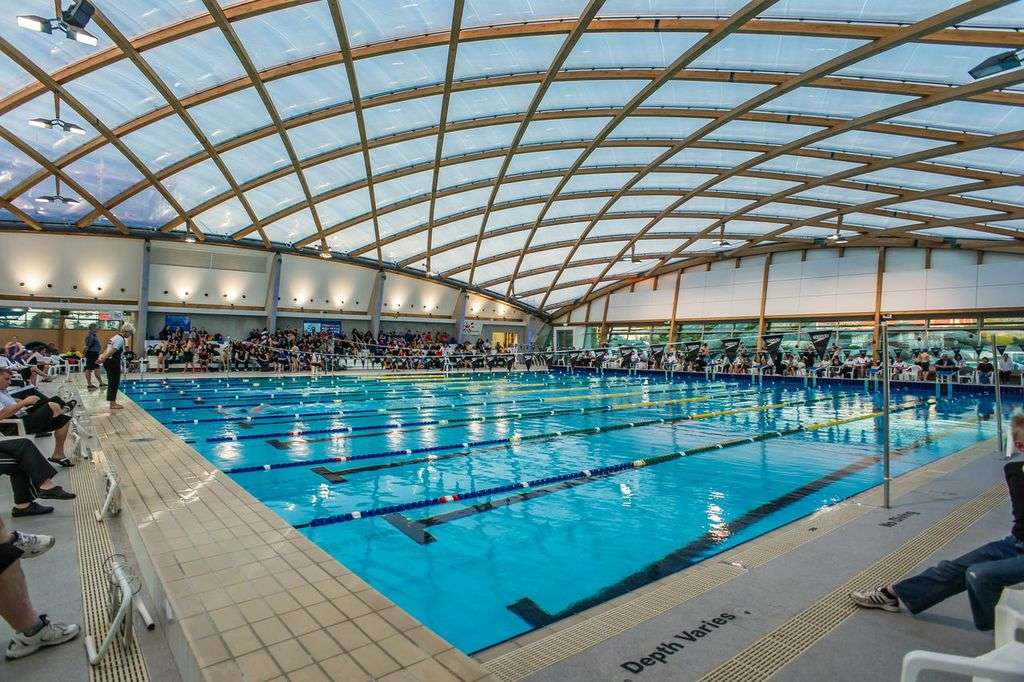
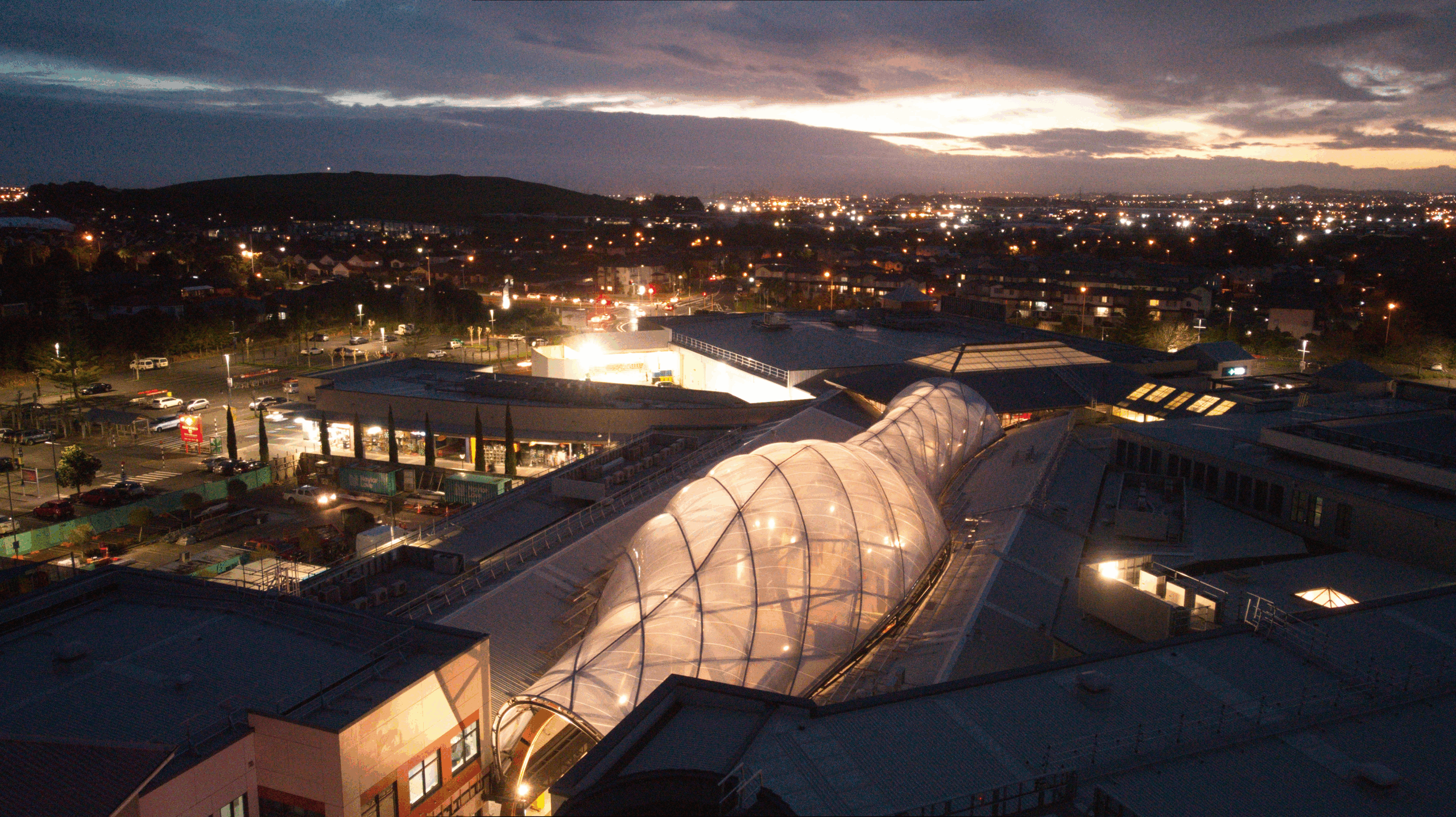
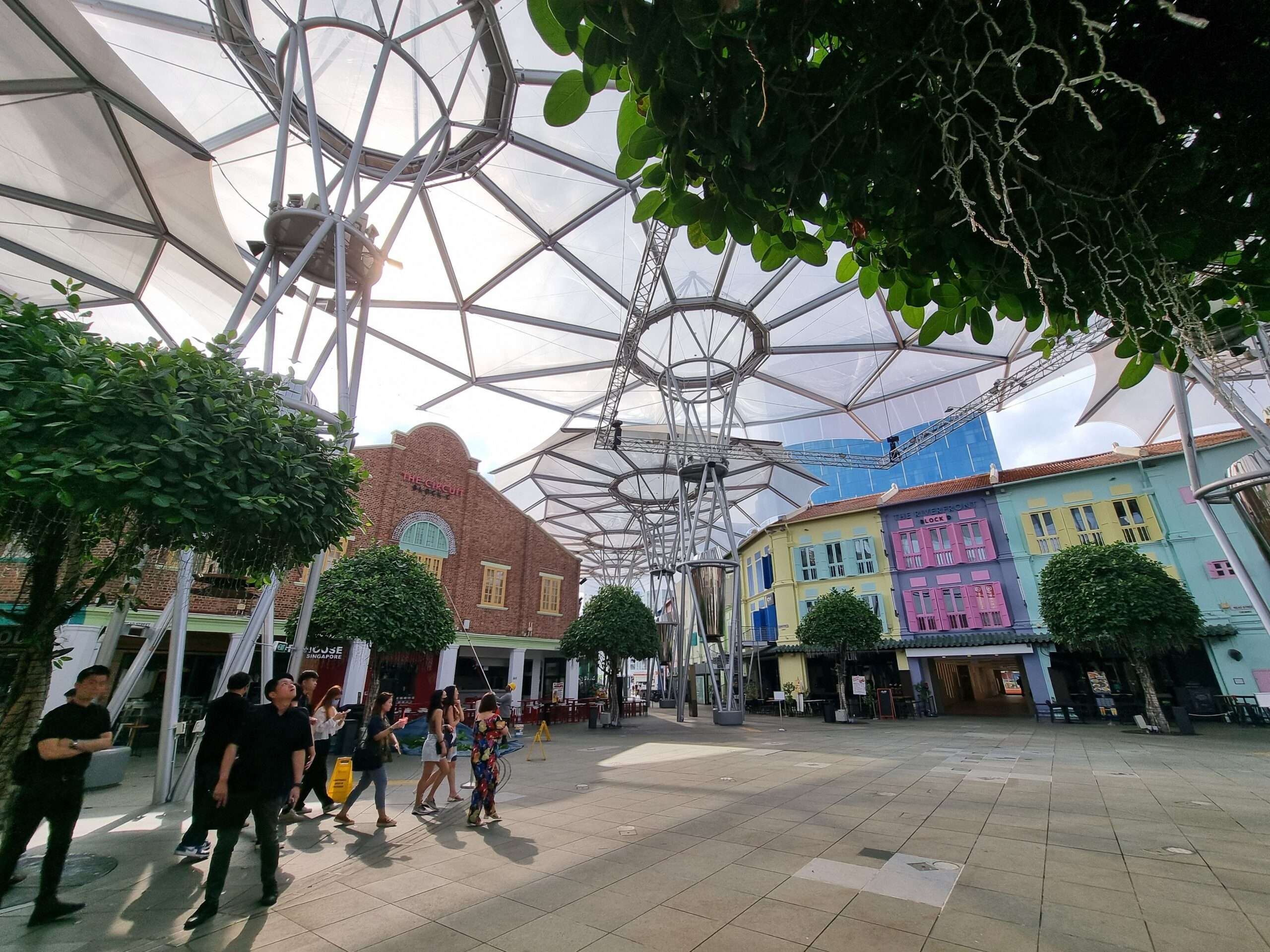
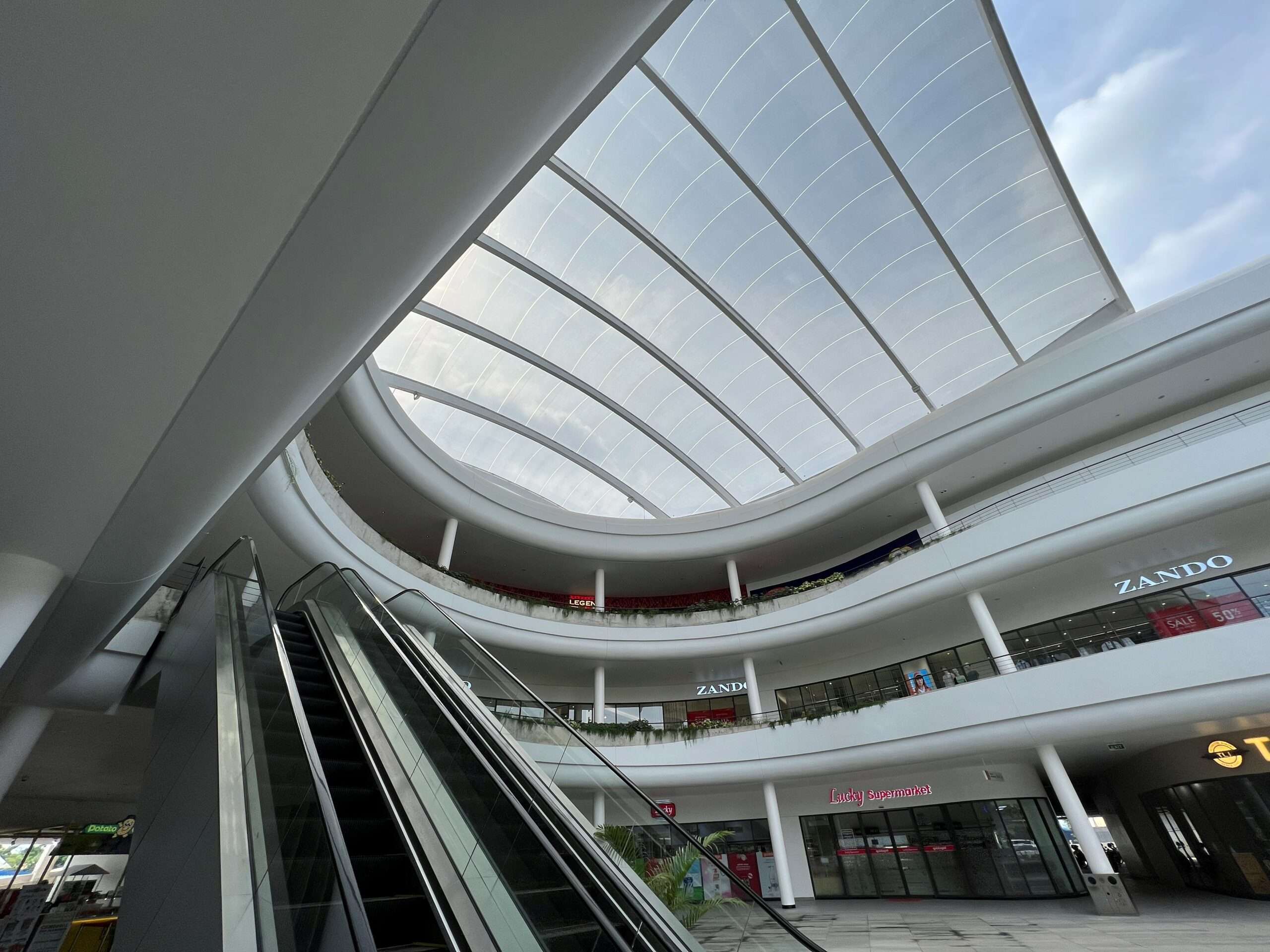
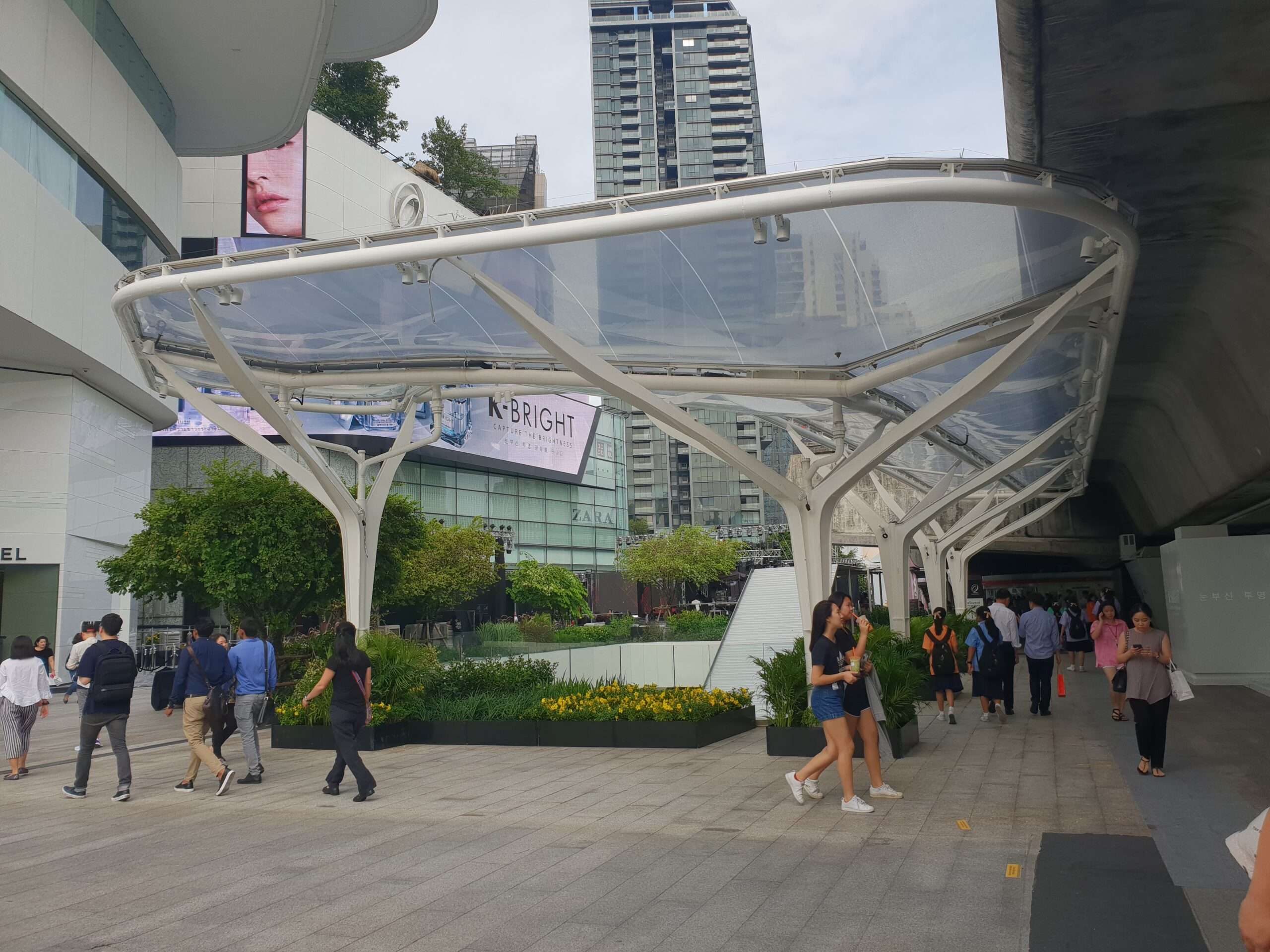
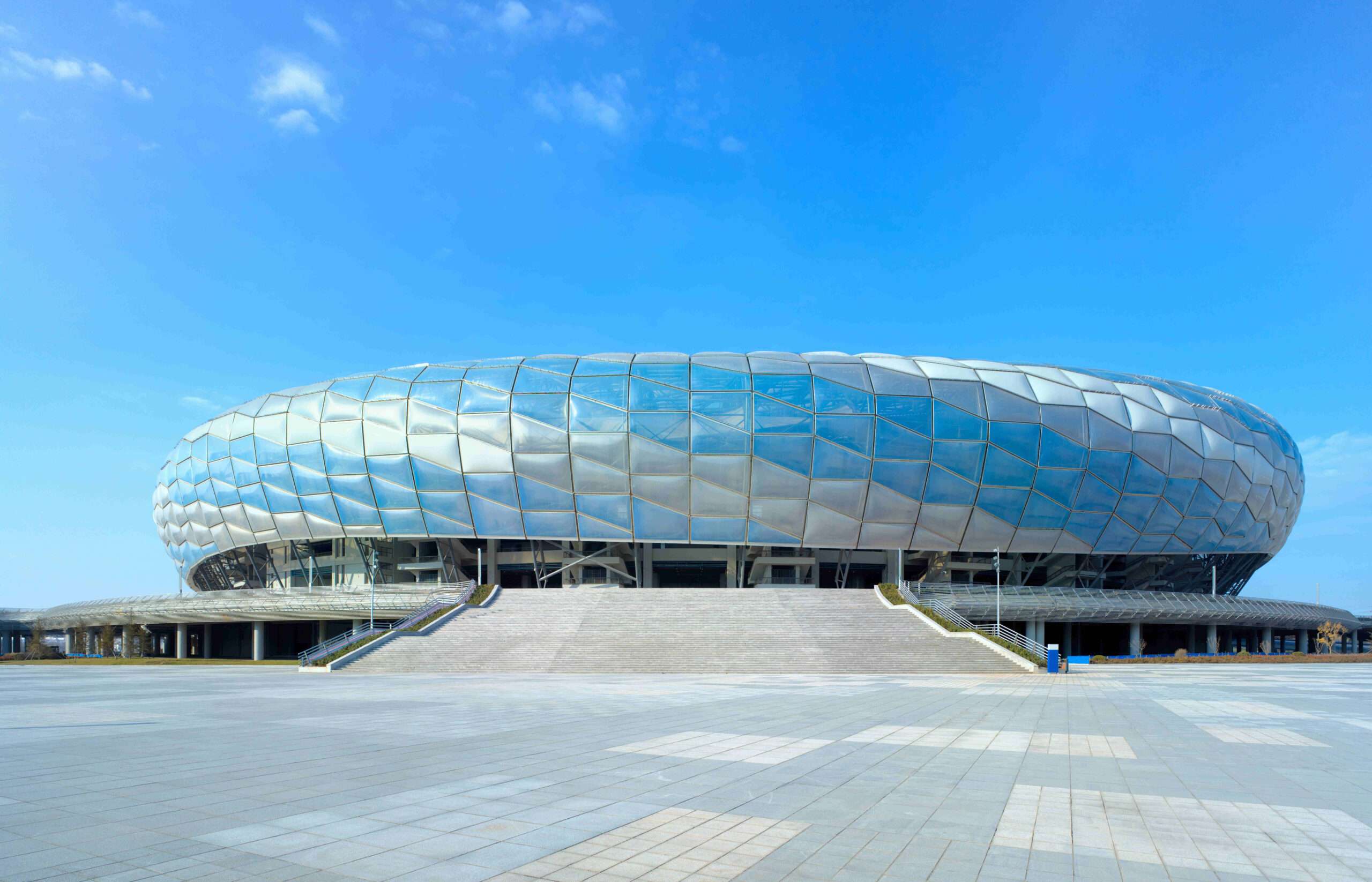
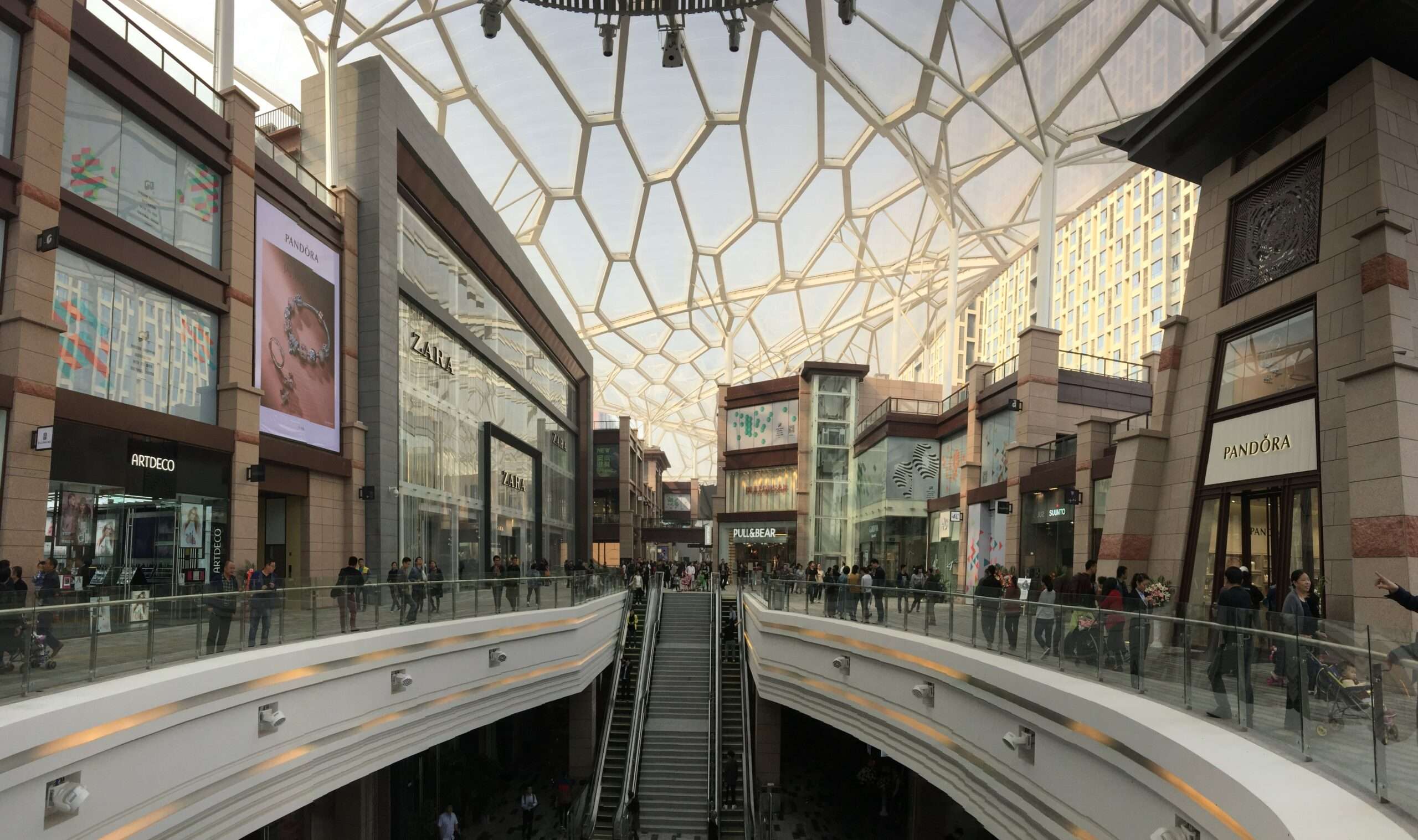
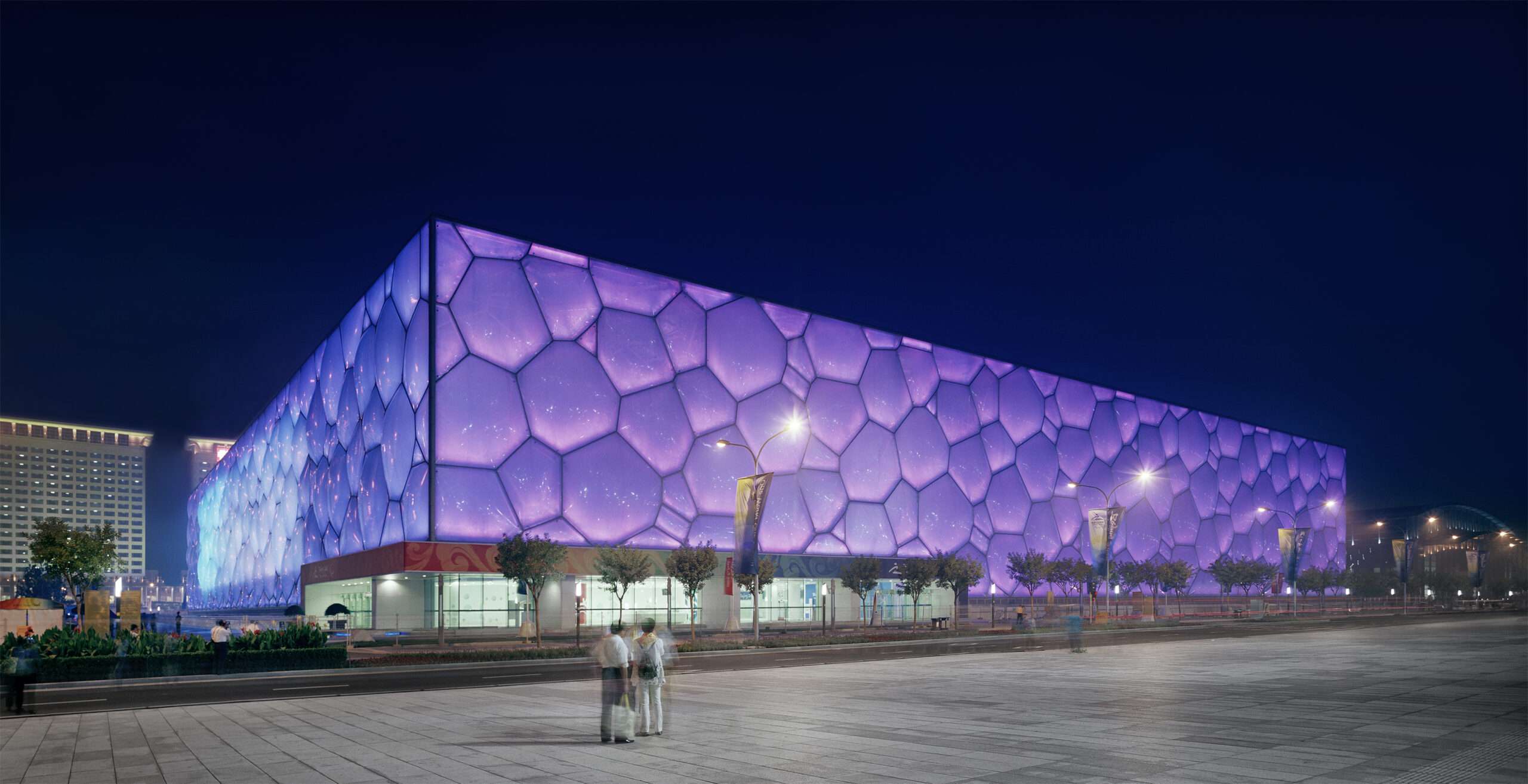
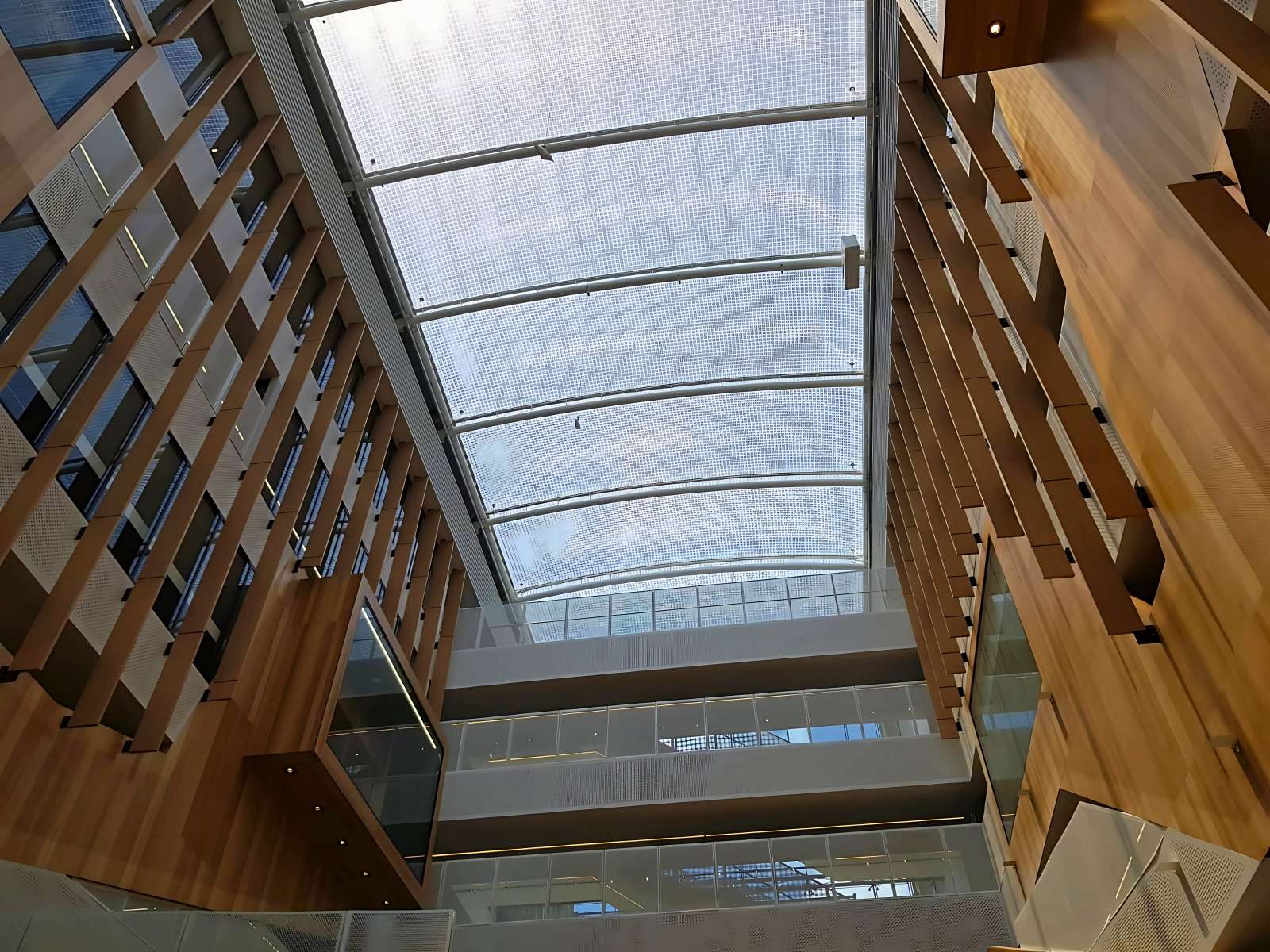
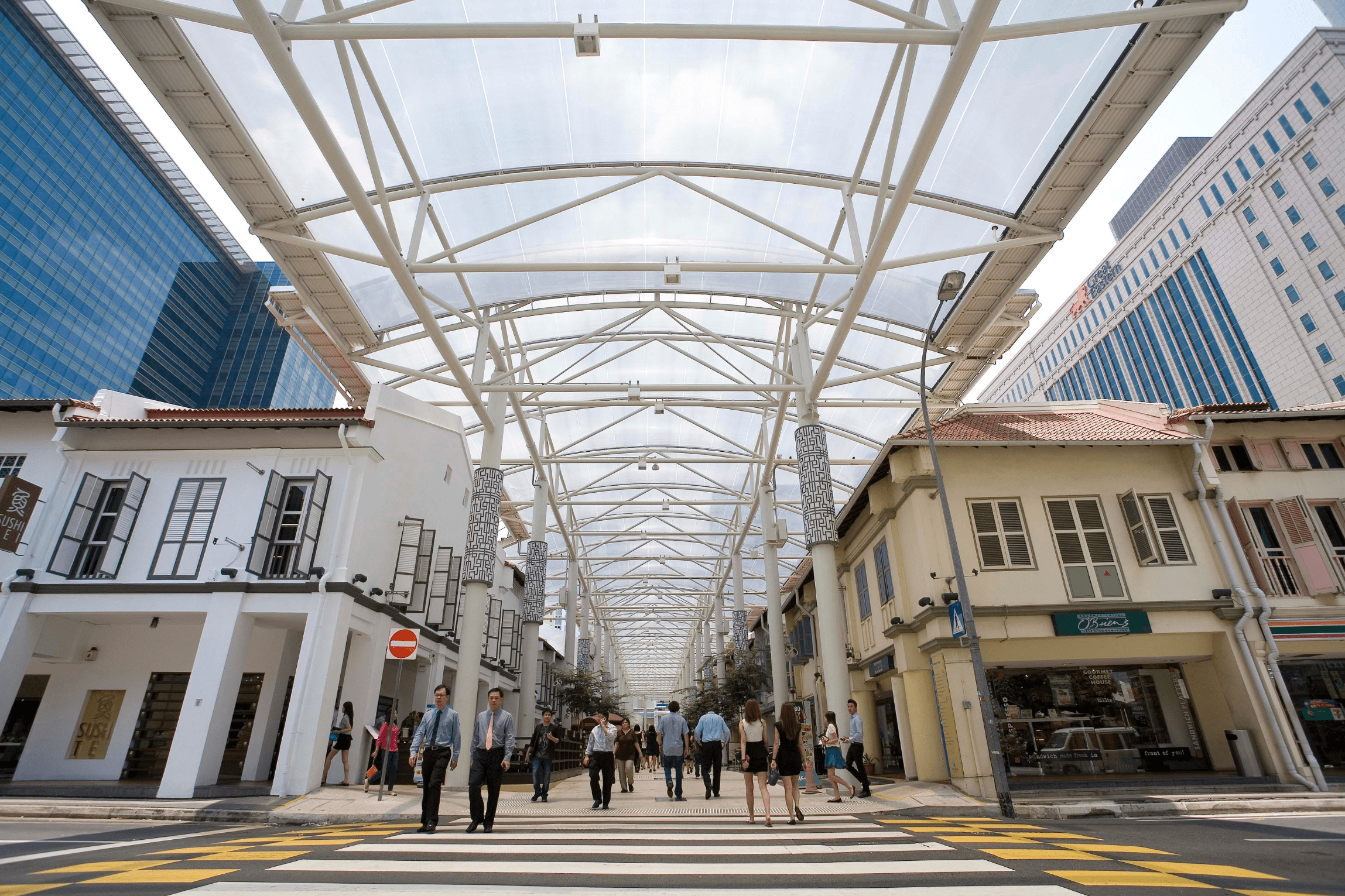
By using ETFE for the atrium roofs, the campus maintains a strong indoor–outdoor atmosphere. The gardens benefit from daylight and ventilation, and the people working within them enjoy a calmer, more pleasant environment.

Surbana Jurong Campus
Surbana Jurong Campus in Singapore features large cable-supported ETFE atrium roofs that deliver daylight, comfort, and energy efficiency for two indoor garden courtyards.
Project Overview
Singapore
Country
3050
m²
of ETFE
2023
Completed
Safdie Architect Pte Ltd
Architects
At a Glance – ETFE at Surbana Jurong Campus
- Two large indoor garden atriums sheltered by transparent ETFE cushion roofs
- Cushion system supported by a cable-truss structure engineered by Vector Foiltec Asia Pacific
- Silver-printed ETFE foil provides shading and solar control
- Enables high levels of natural daylight for both planting and interior spaces
- Lightweight roof structure reduces steel use and embodied energy
- Low-maintenance and durable in Singapore’s tropical climate
- Contributed to the campus achieving Green Mark Platinum Super Low Energy status
3,050 m²
of ETFE
ETFE Roofs Shaping a Light-Filled, Nature-Integrated Workplace
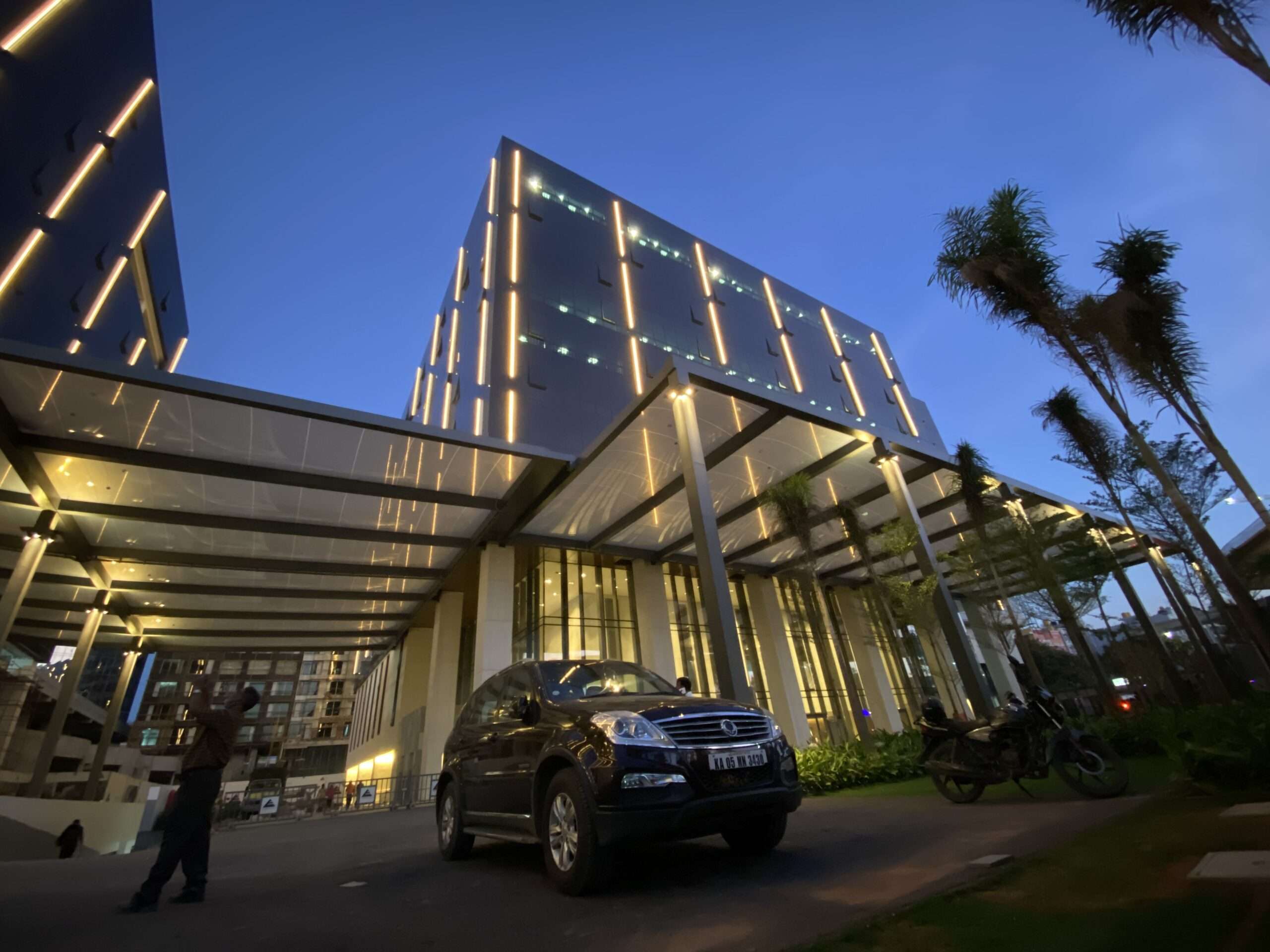
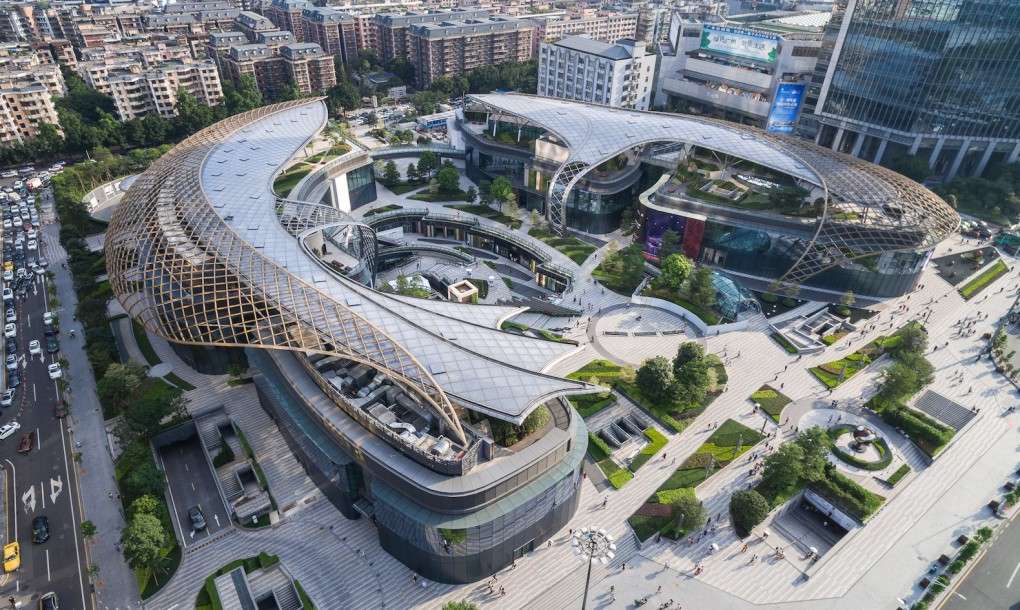
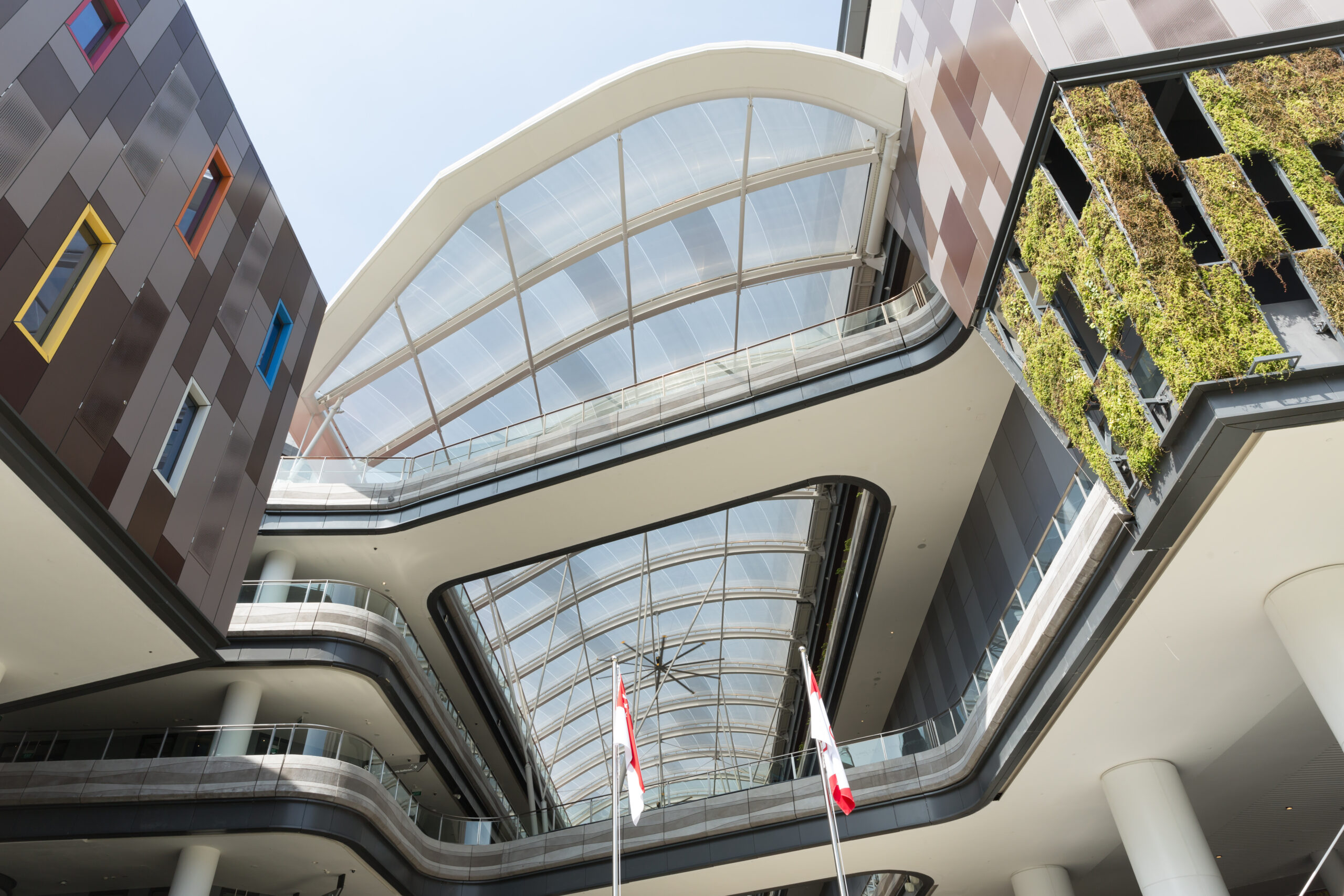
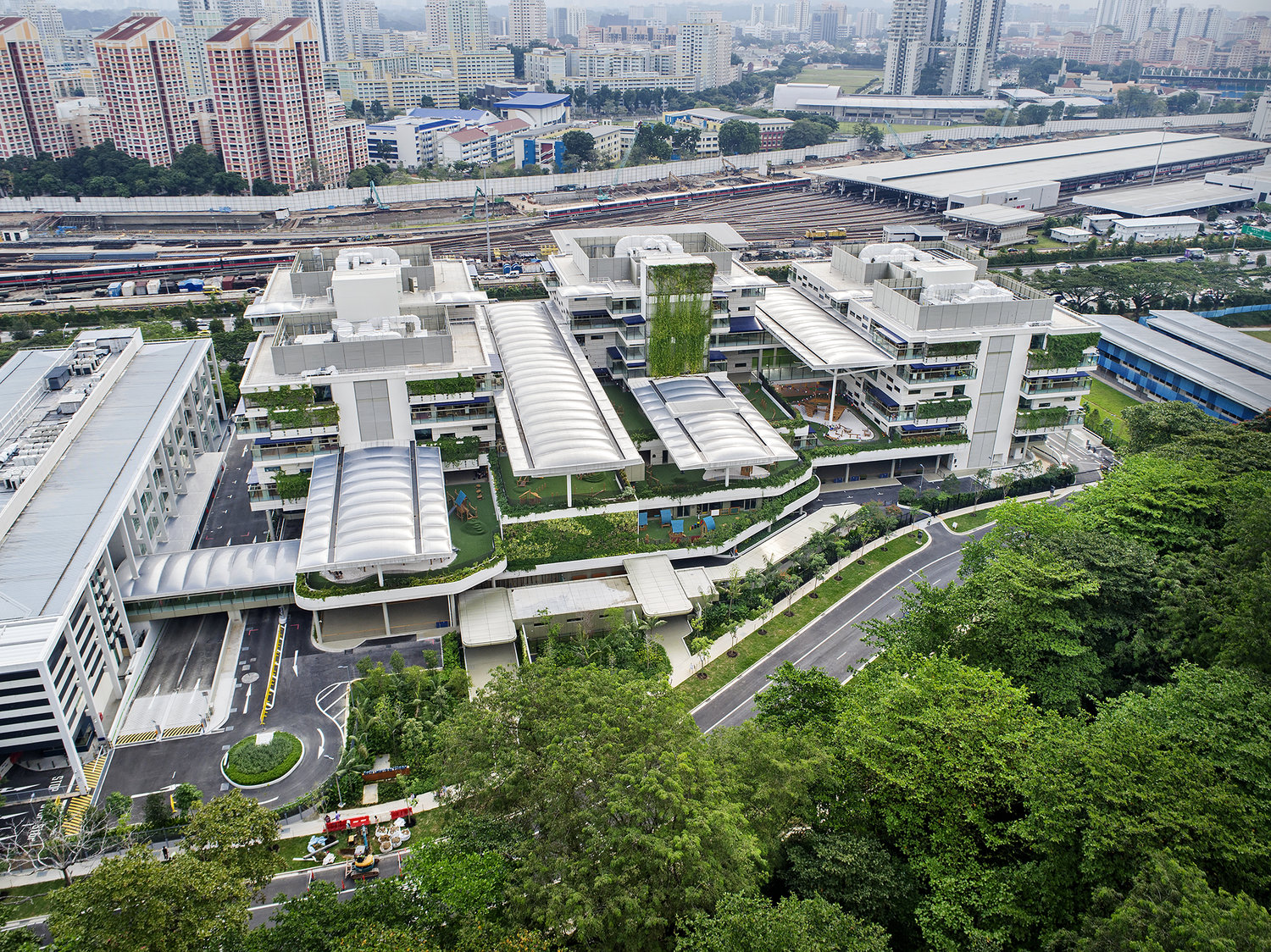
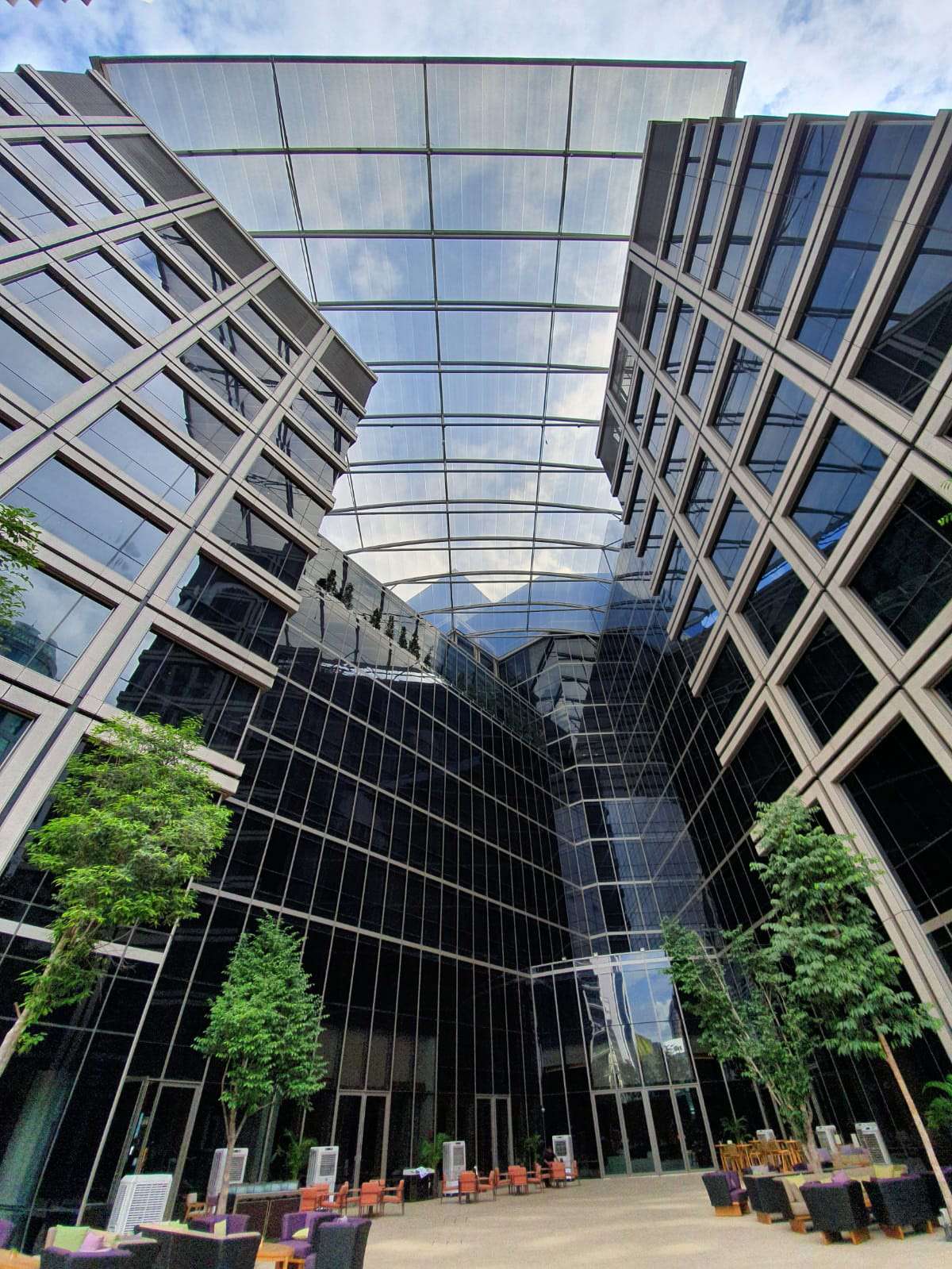
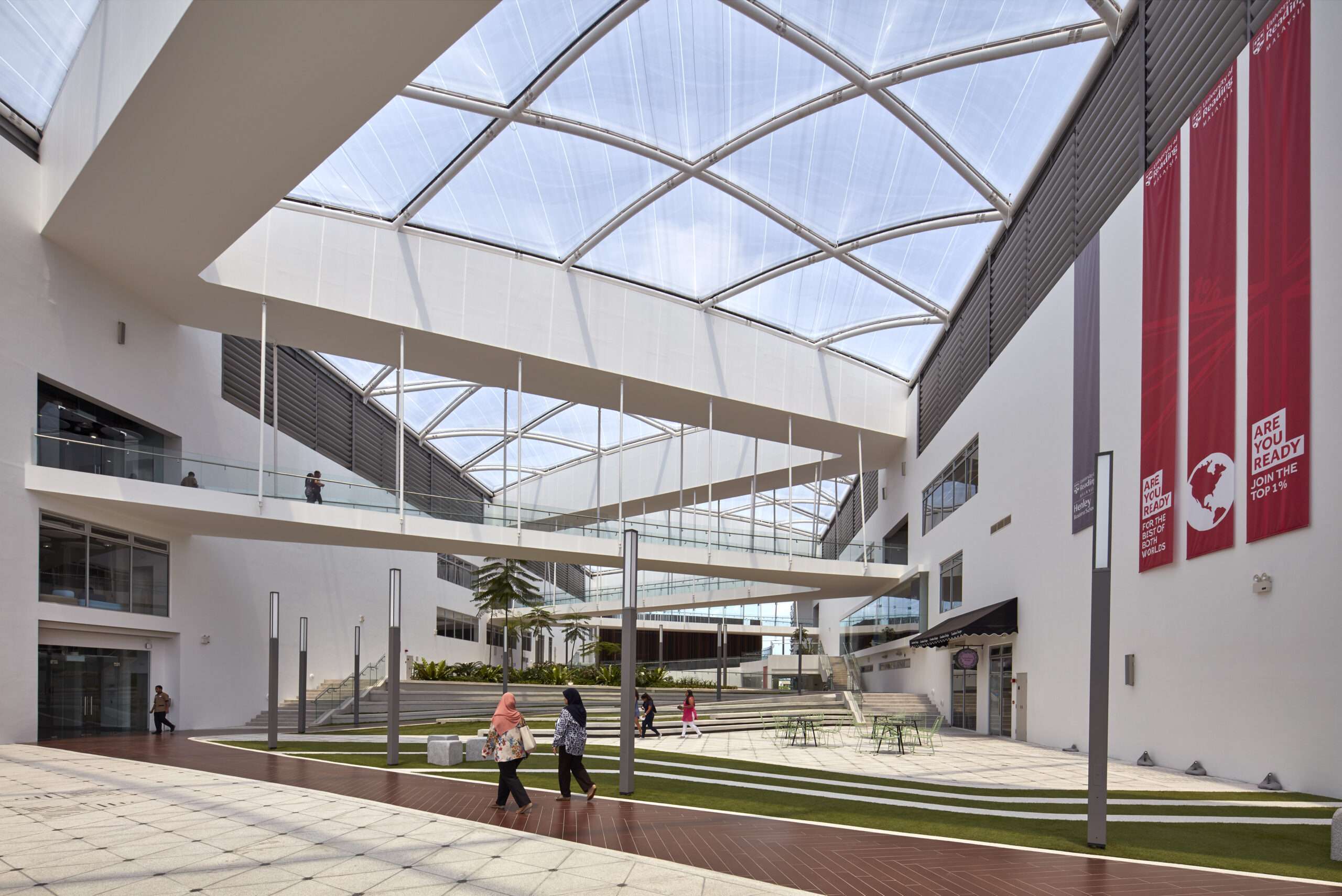
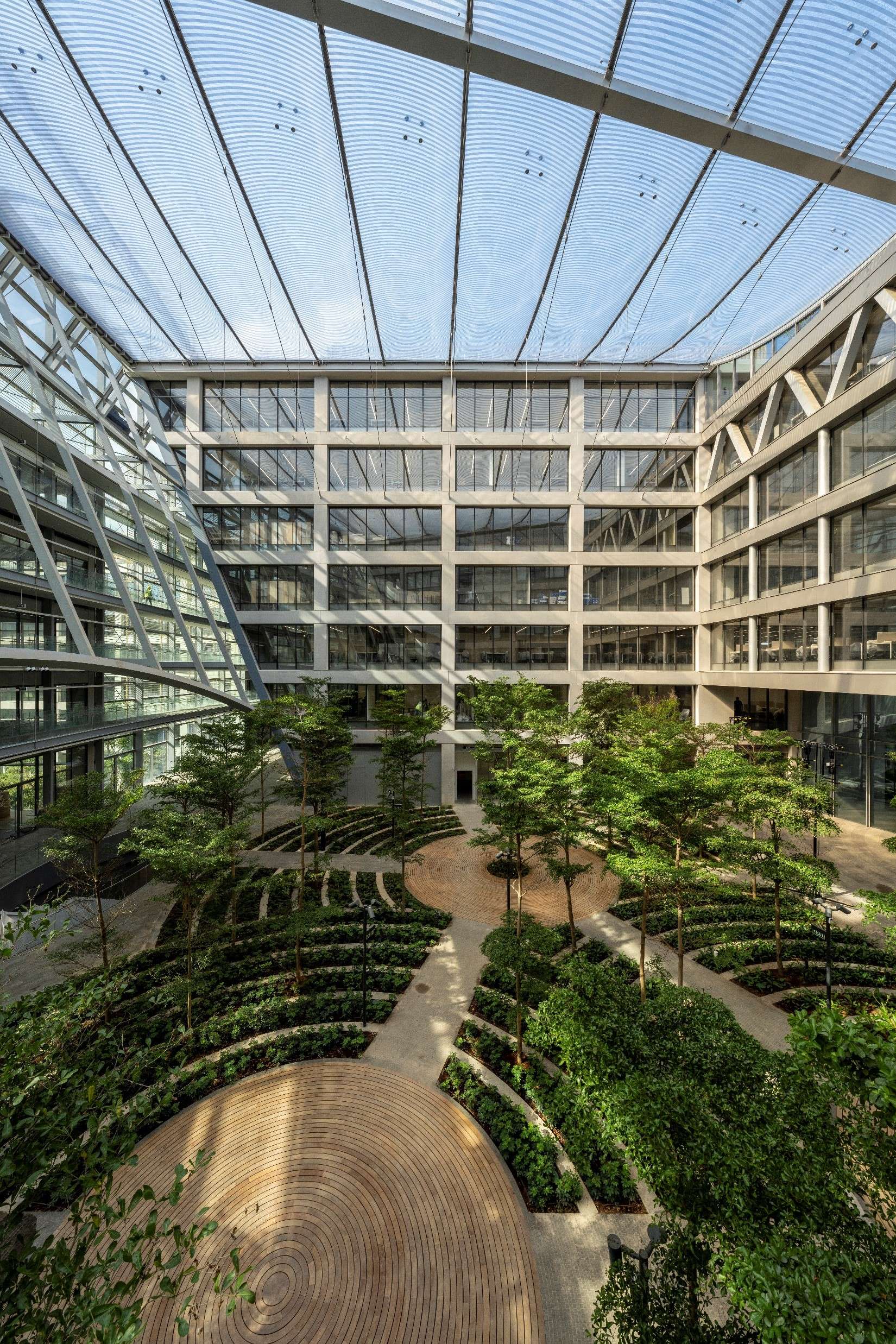
The Surbana Jurong Campus in Singapore is a 69,000 m² headquarters designed by Safdie Architects to create a workplace rooted in landscape, daylight, and openness. Located in the Jurong Innovation District, the campus brings together 4,000 employees in ten interconnected pavilions arranged around two large garden courtyards. These courtyard spaces are protected by ETFE cushion roofs, allowing greenery and daylight to define the building’s central gathering areas.
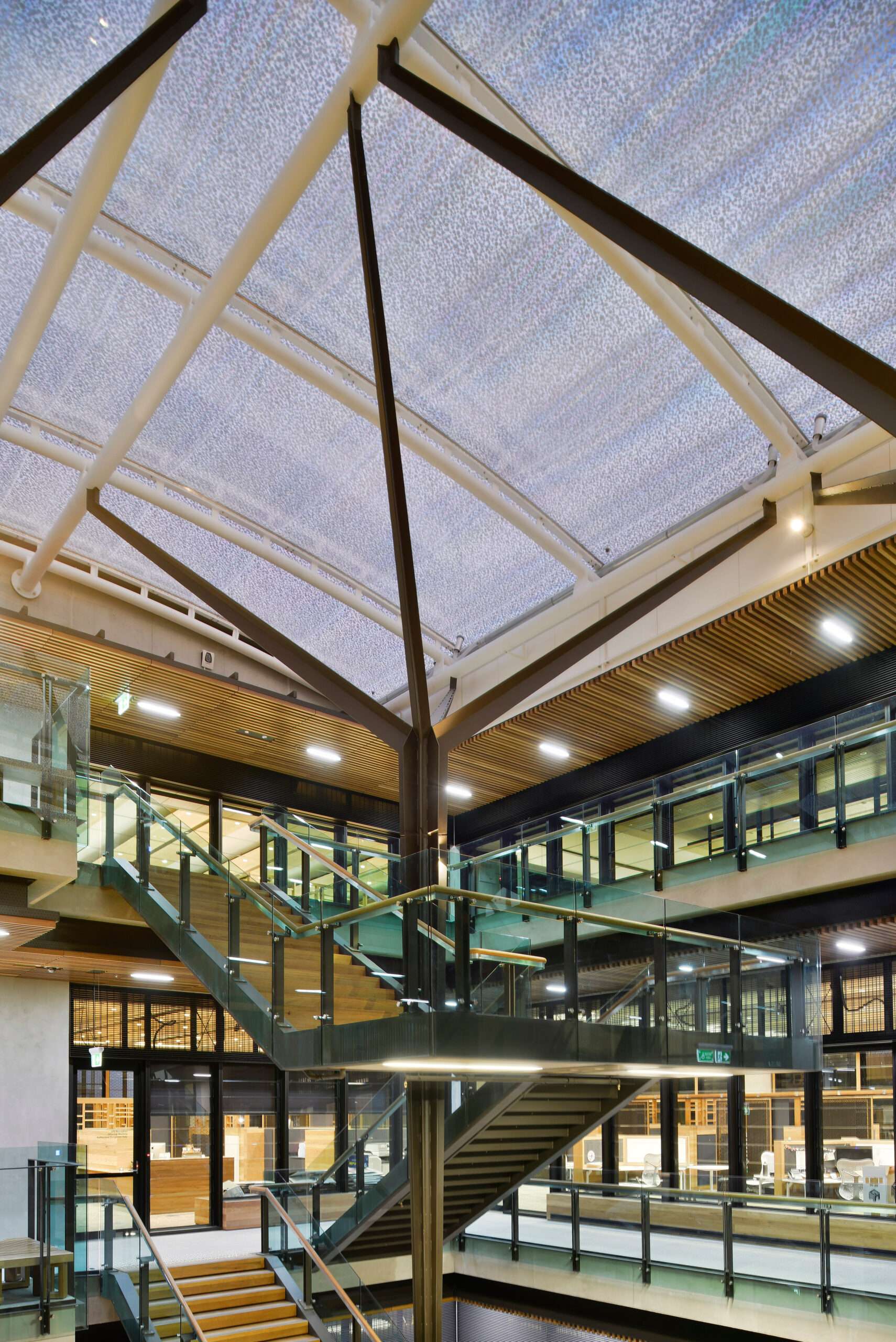
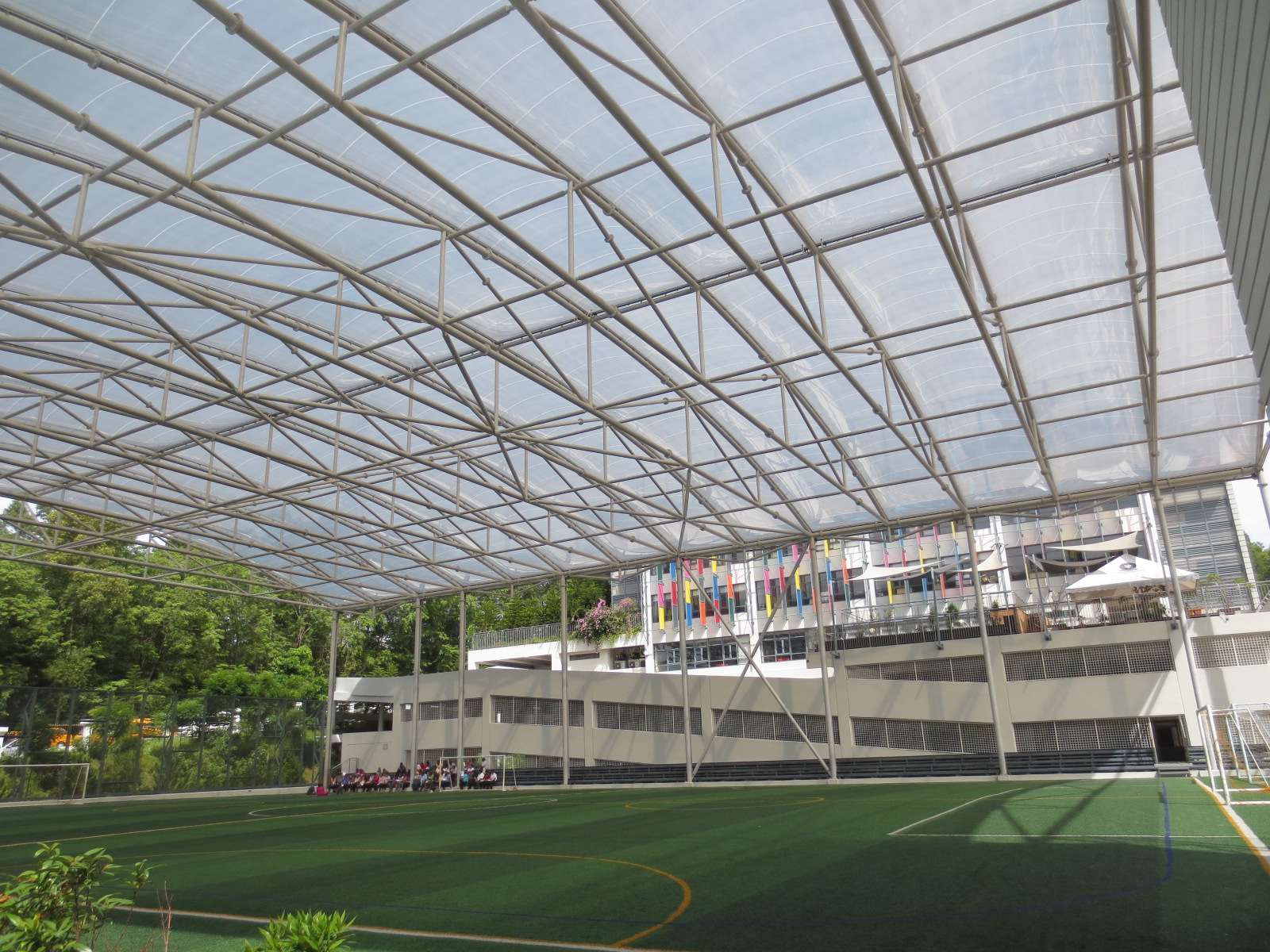
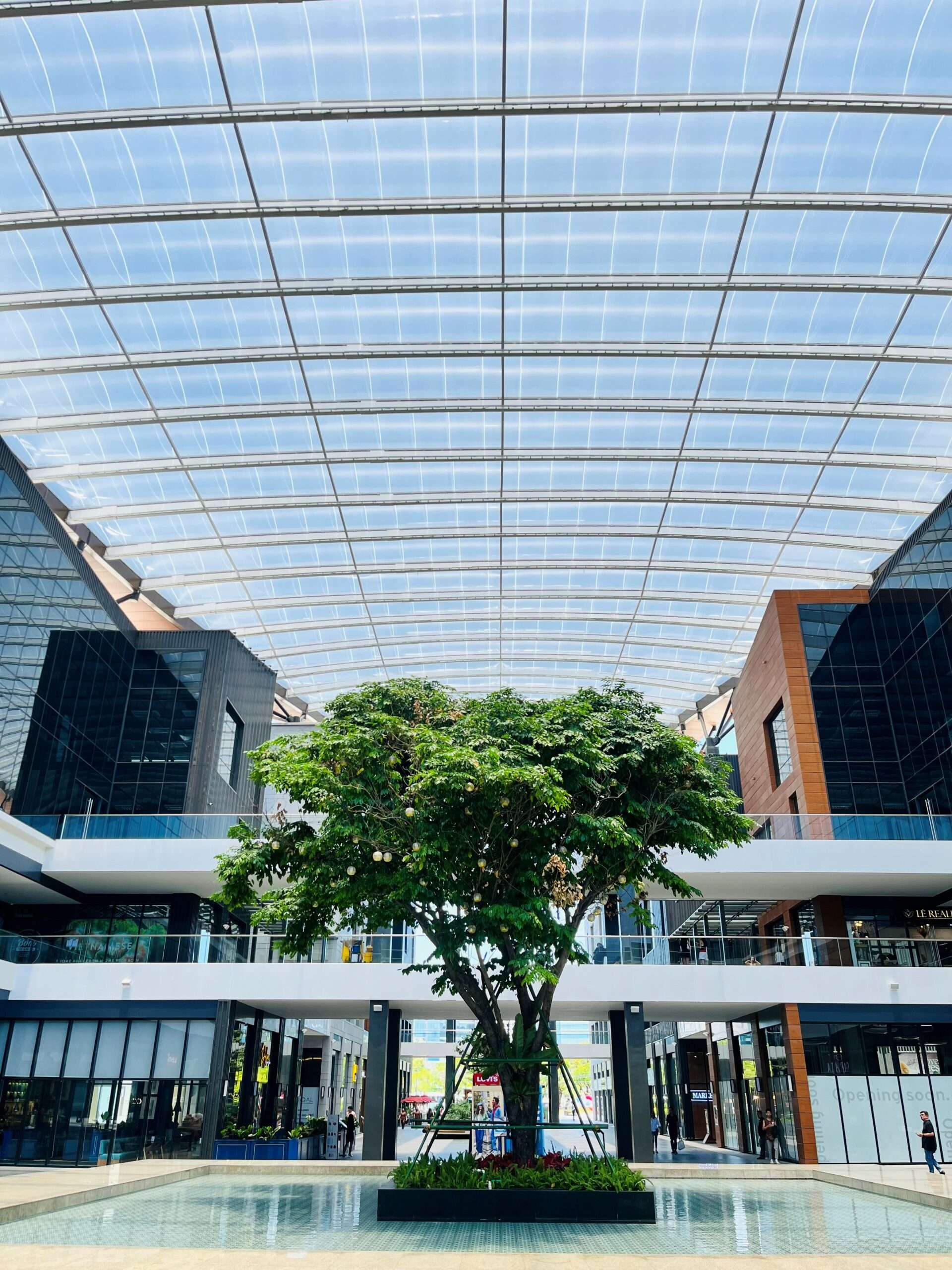
The design centers on two climatically controlled indoor gardens known as the campus atriums. These courtyards function as meeting places, circulation hubs, and breakout spaces, and they form the green heart of the development. To make these gardens usable in Singapore’s tropical climate, each courtyard is covered with a lightweight ETFE cushion system that combines high transparency with controlled shading.
Do you want to talk about your project?
We are happy to assist you in every stage of your project, from design, engineering and structural engineering.

Matthew Penrose
Executive Vice President | Asia Pacific
Daylight and Solar Control Working Together
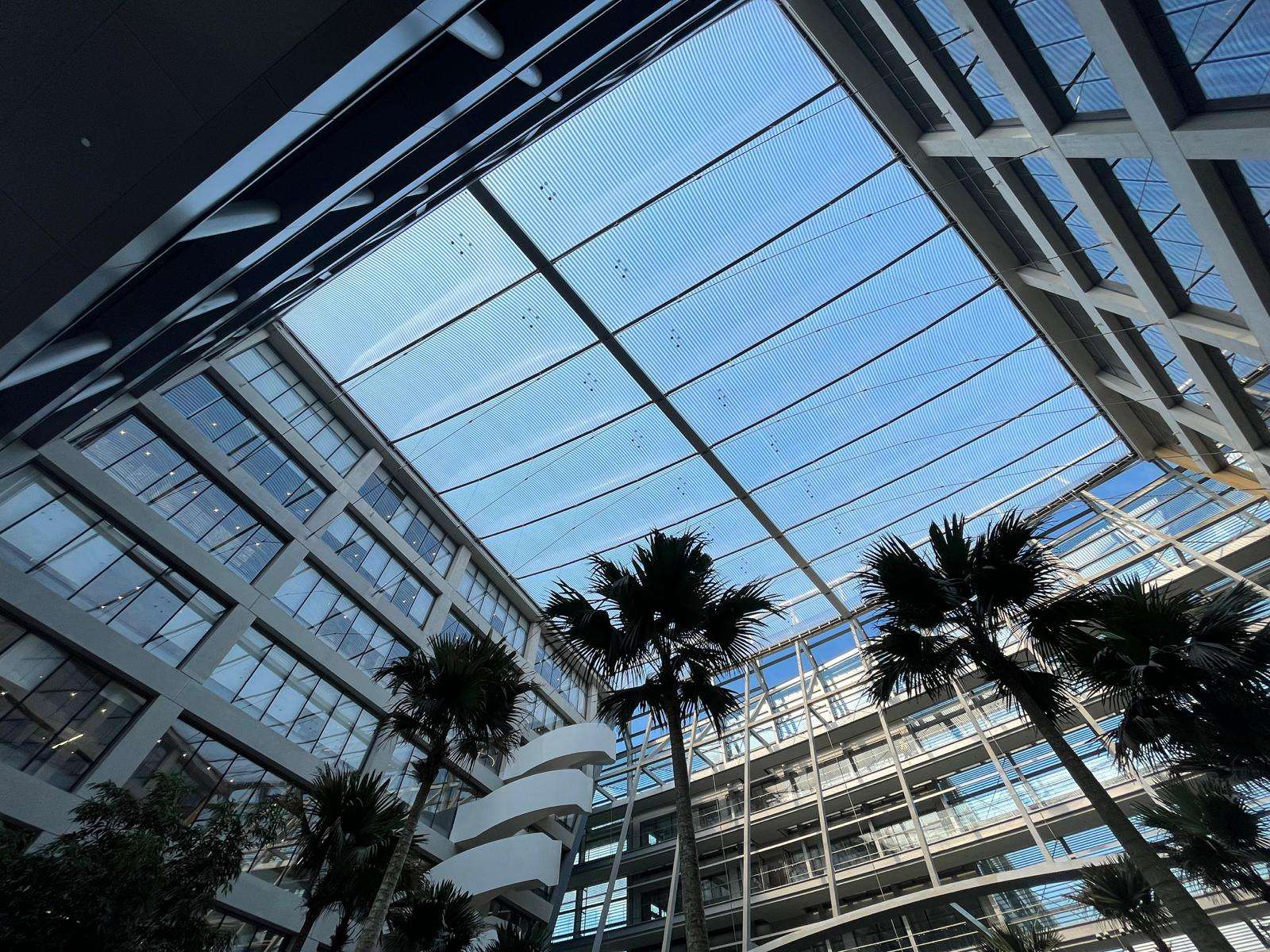
With the use of ETFE comes material savings, lower embodied energy, and a clean architectural expression.
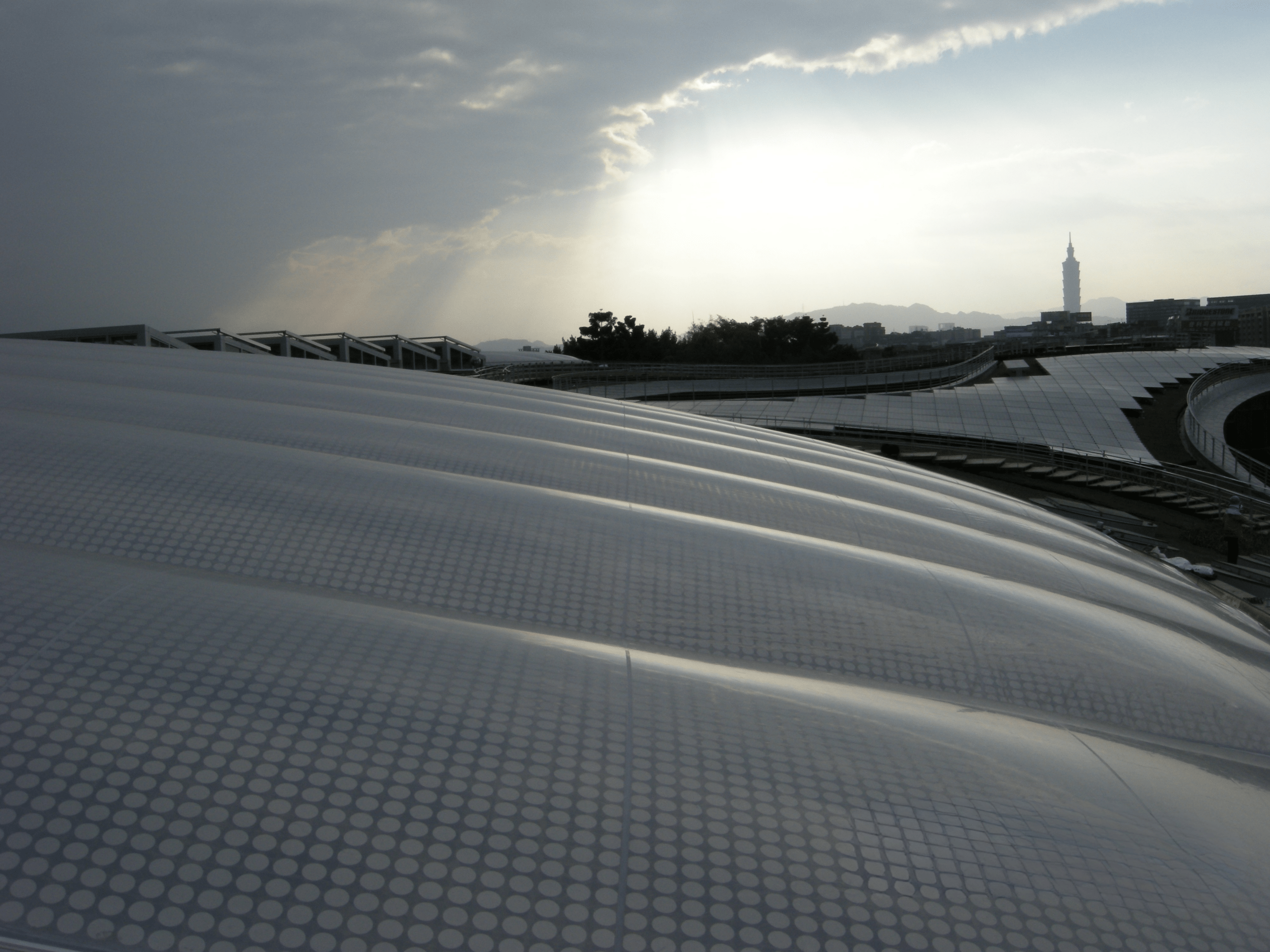
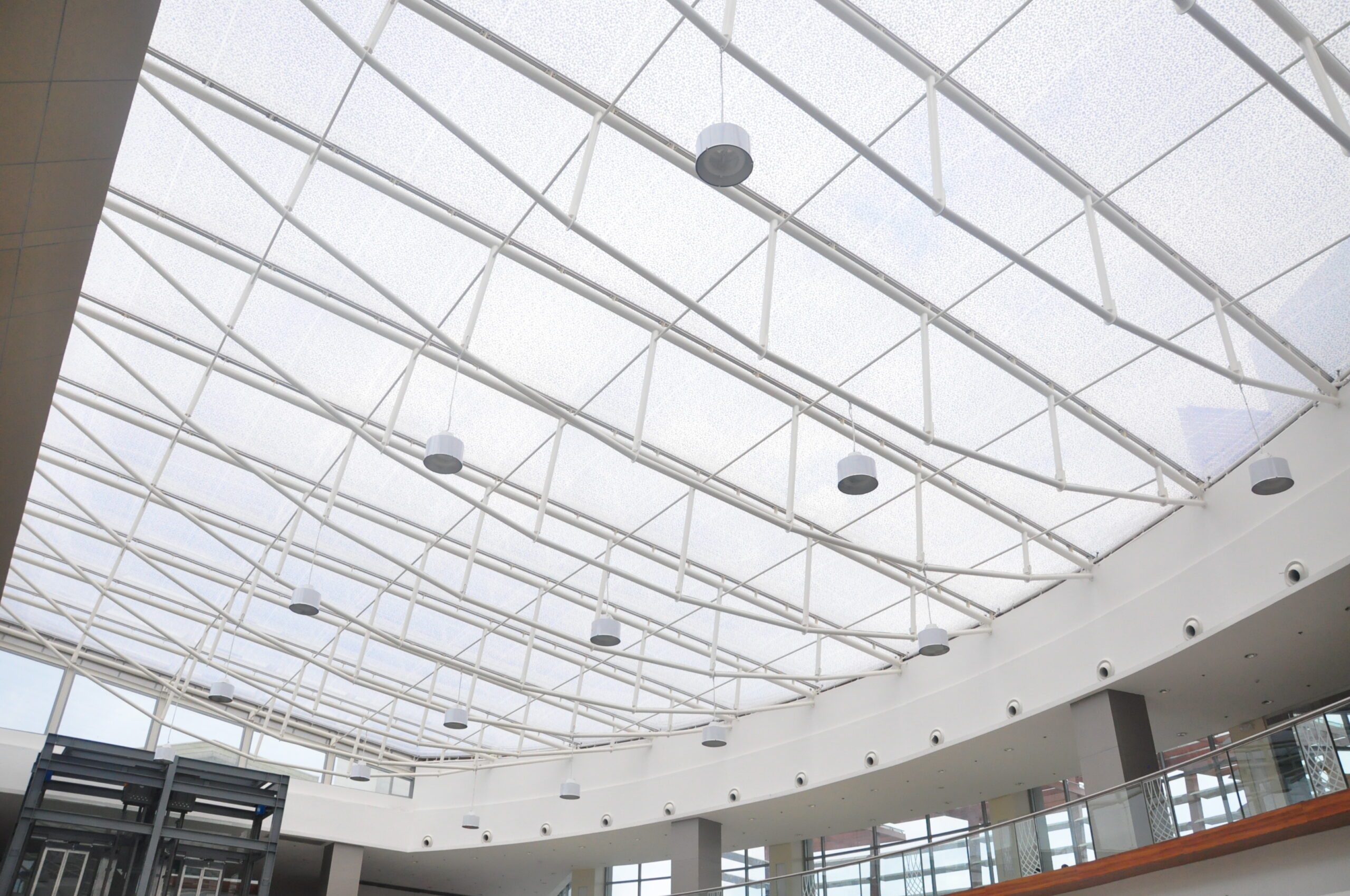
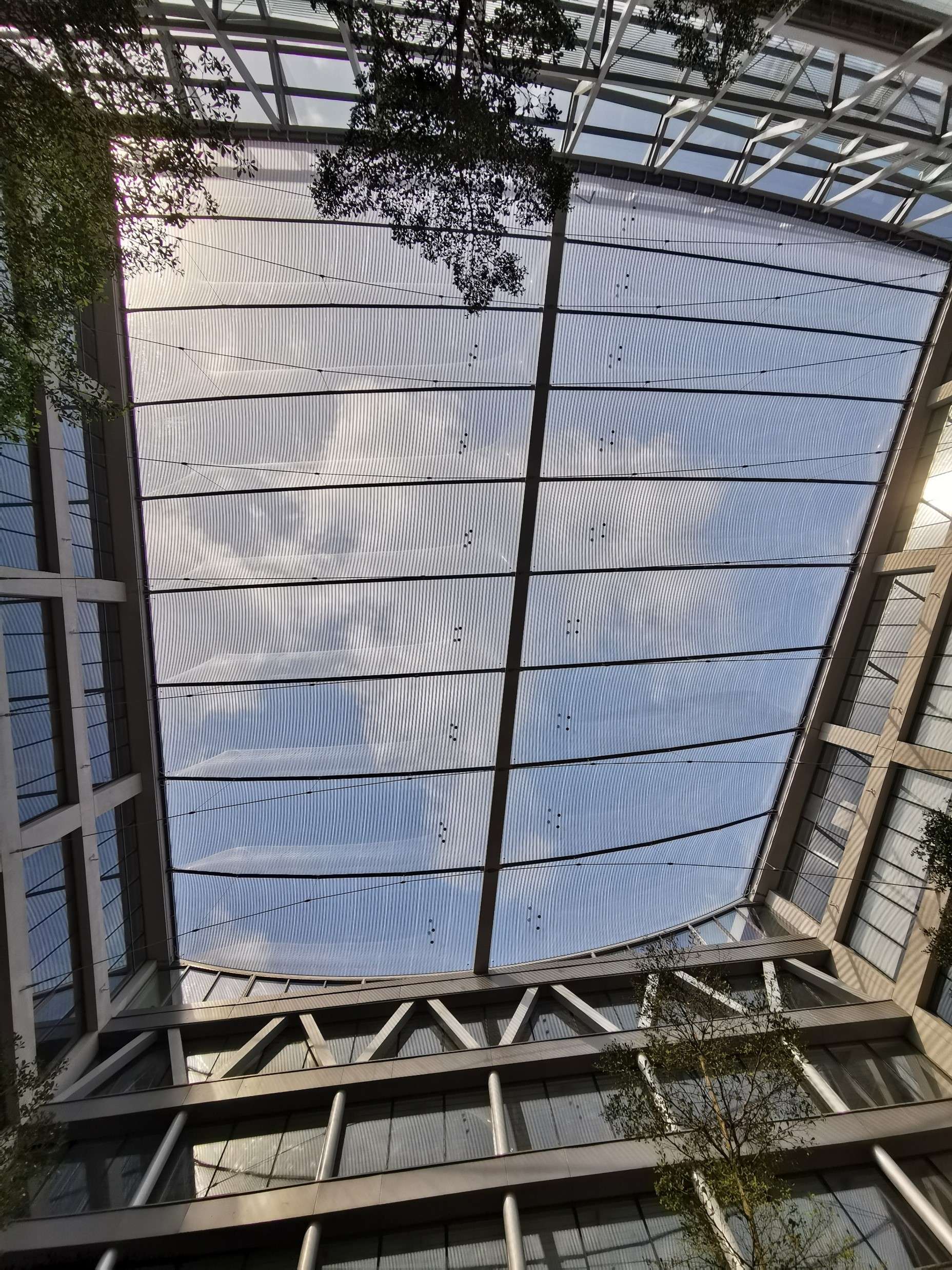
The ETFE cushions offer excellent natural light transmission, which was vital for maintaining the character of the indoor gardens. At the same time, the upper layer features a silver-printed pattern that reflects part of the sun’s heat, preventing excessive temperatures within the atriums. This balance ensures that the spaces remain bright and comfortable for both people and plants throughout the day.
Cable-Supported Engineering for a Minimal Structure
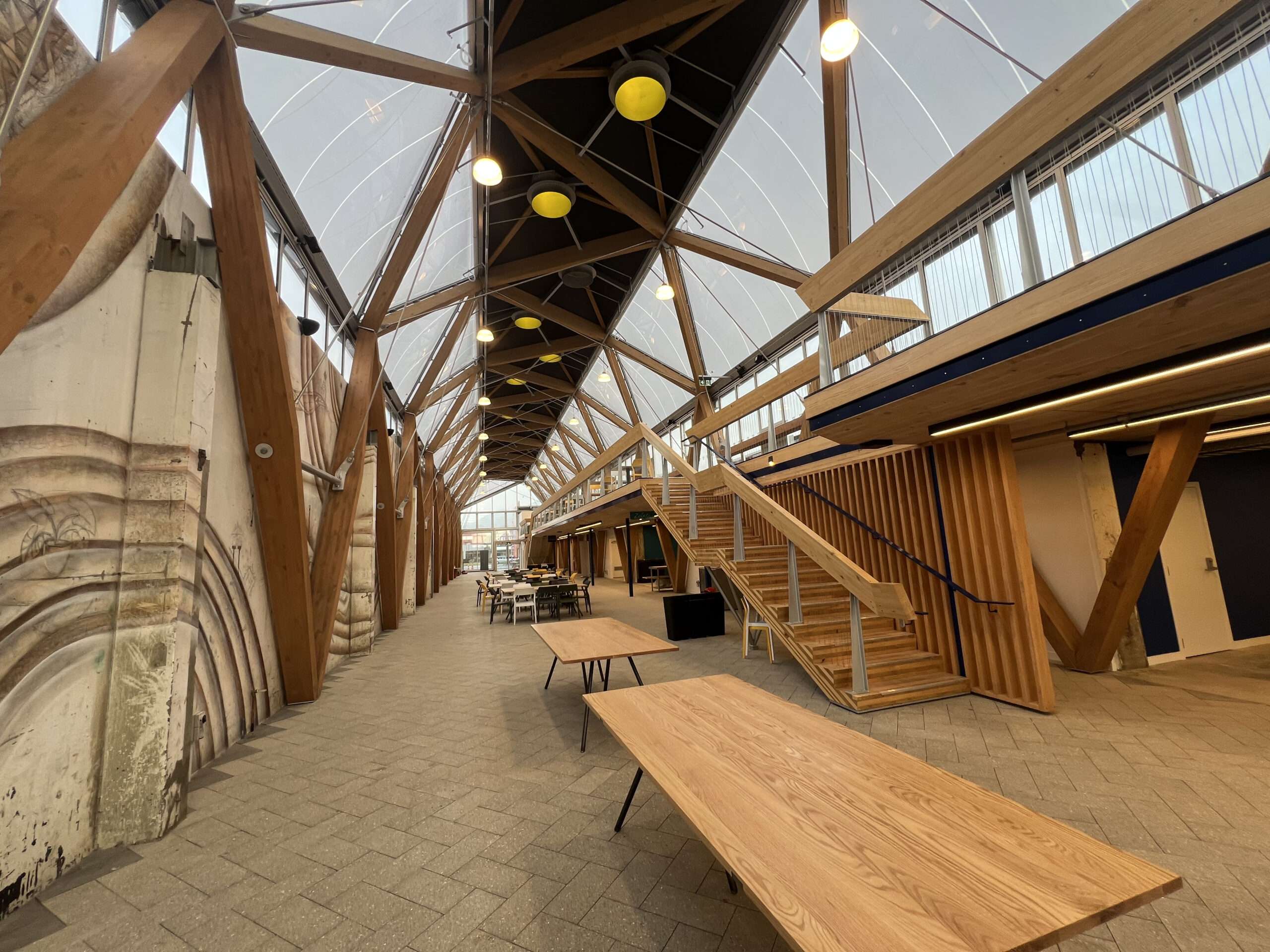
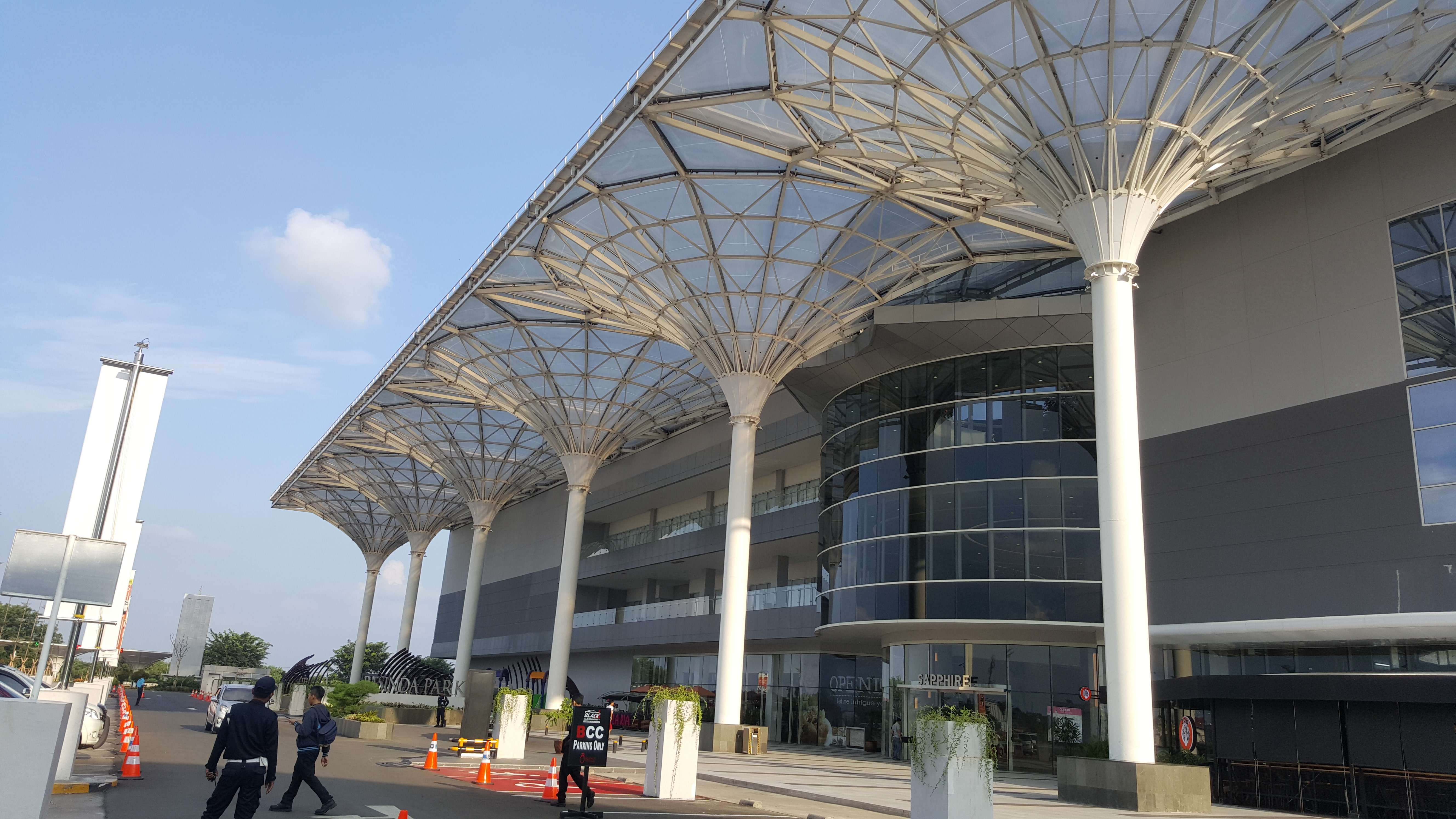
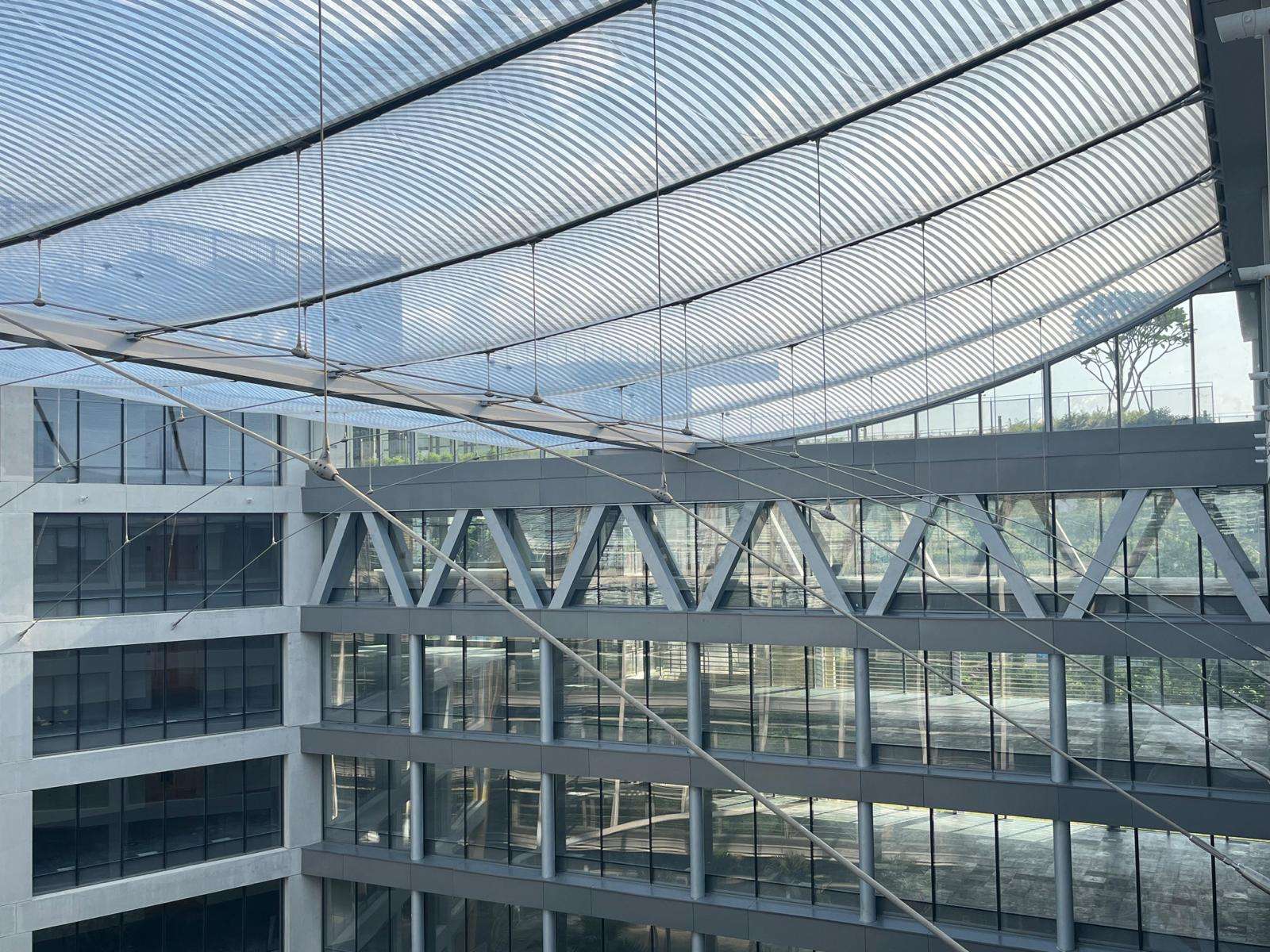
To preserve openness and avoid heavy roof forms, the ETFE system is supported by a cable-and-steel grid. This allowed the wide spans to be achieved with less steel and slimmer structural members. Vector Foiltec Asia Pacific designed, supplied, and installed the ETFE roof system and the cable-supported structure, ensuring that movement, load, and wind behavior were fully integrated into the design.
Because ETFE is extremely lightweight, the overall structural demands are significantly reduced. This resulted in material savings, lower embodied energy, and a clean architectural expression that sits lightly above the gardens.
Visual Journey
Click on the pictures to see the full size
Designed for Singapore’s Climate
Singapore’s heat, humidity, rainfall, and UV exposure require a cladding material with reliable long-term performance. ETFE is naturally resistant to corrosion, does not degrade under UV light, and requires minimal maintenance to stay clear. The cushions are also permanently inflated at low pressure, helping them shed water and maintain their shape during heavy rain or wind.
These properties contributed to the campus earning Green Mark Platinum Super Low Energy certification, one of the country’s highest sustainability ratings.
A Workplace Defined by Light, Air, and Nature
By using ETFE for the atrium roofs, the campus maintains a strong indoor–outdoor atmosphere. The gardens benefit from daylight and ventilation, and the people working within them enjoy a calmer, more pleasant environment. The lightweight roof system is a key element in making the Surbana Jurong Campus a place where landscape, architecture, and engineering work together to enhance comfort and well-being.
Media Copyrights
© Darren Soh and Vector Foiltec Asia Pacific
Read more