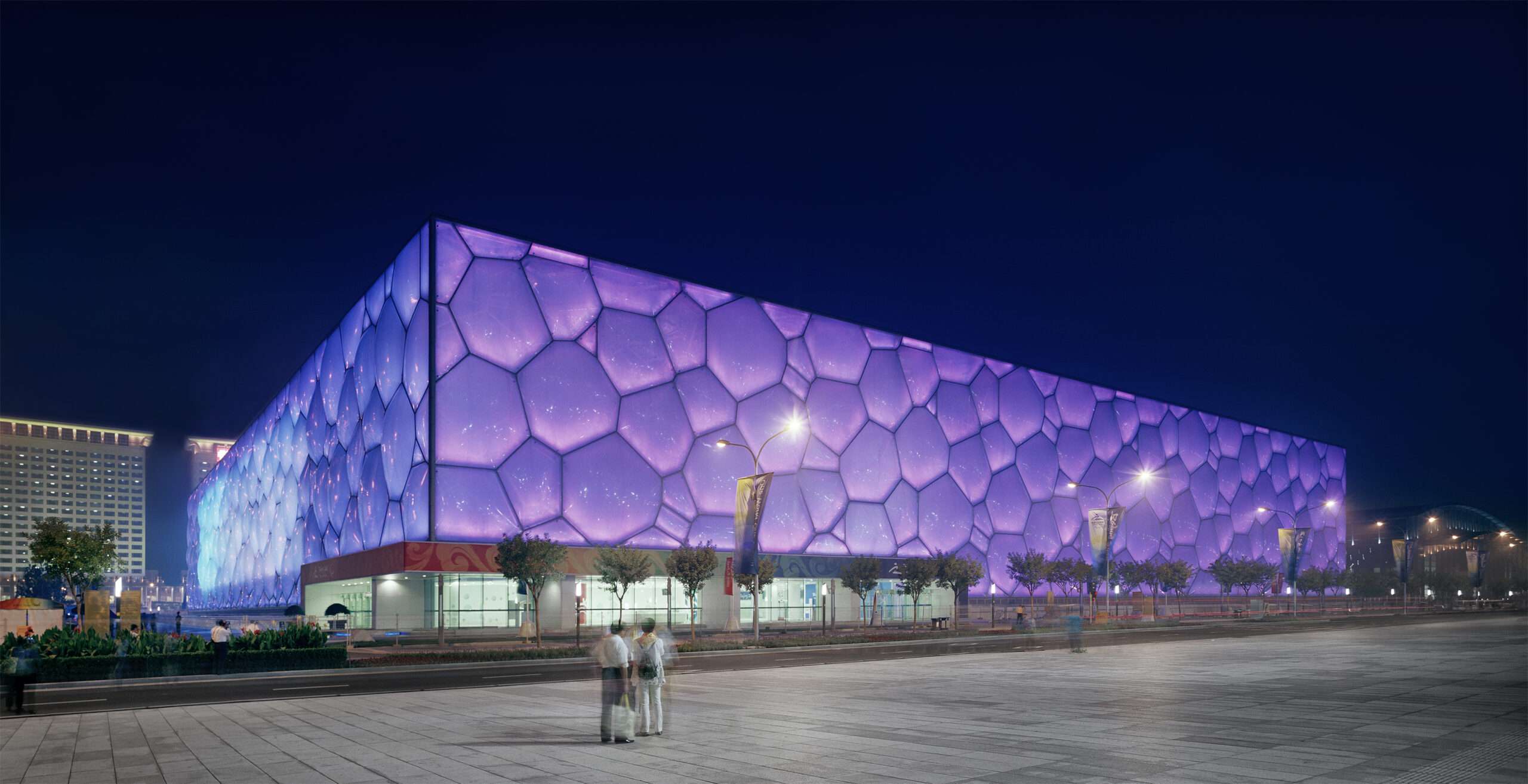
The famous Watercube! One of our biggest projects and also known as Beijing National Aquatics Center. Over 100.000m² of ETFE and a truly unique design. The Water Cube is the largest ETFE-clad structure in the world, and its complex, bubble-like geometry could not have been built with any other system.
Beijing Olympic Stadium
The Beijing Olympic Stadium (The Watercube) demonstrates that ETFE is more than a roofing material. It’s a medium for creativity, technical precision, and sustainable performance. It enables buildings to go beyond the expected and become art, infrastructure, and experience in one.
Project Overview
China
Country
100000
m²
of ETFE
2007
Completed
CSCEC & DESIGN, Arup Pty. Ltd, PTW Architects
Architects
At A Glance – ETFE at the Water Cube
- World’s largest ETFE project with over 100,000 m² of cladding.
- Around 4,000 ETFE cushions in 15 unique sizes, inspired by soap-bubble geometry.
- Lightweight system reduced structural loads while enabling complex free-form design.
- Provides up to 55% energy savings on sunny days; 20% of solar energy reused for heating pools.
- Durable, low-maintenance, and recyclable, designed for long-term performance in Beijing’s climate.
100,000 m²
of ETFE
A Global Icon Made Possible with ETFE
Few buildings in the world demonstrate the power of architecture, material science, and cultural storytelling quite like the Beijing National Aquatics Center, also known as the Water Cube. Completed for the 2008 Olympic Games, this landmark structure is not only a symbol of national pride but also a showcase of what’s architecturally possible when the right material meets the right vision.
At the core of this revolutionary building is one material: ETFE (Ethylene Tetrafluoroethylene). The Water Cube is the largest ETFE-clad structure in the world, and its complex, bubble-like geometry could not have been built with any other system.
Local expertise meets German engineering!
We offer local support and are happy to assist you in every stage of your project: From design, engineering to structural engineering.

Qian Cheng
General Manager | China
Geometry Inspired by Nature, Engineered with Precision
Inspiration found in nature, used to transform the community.
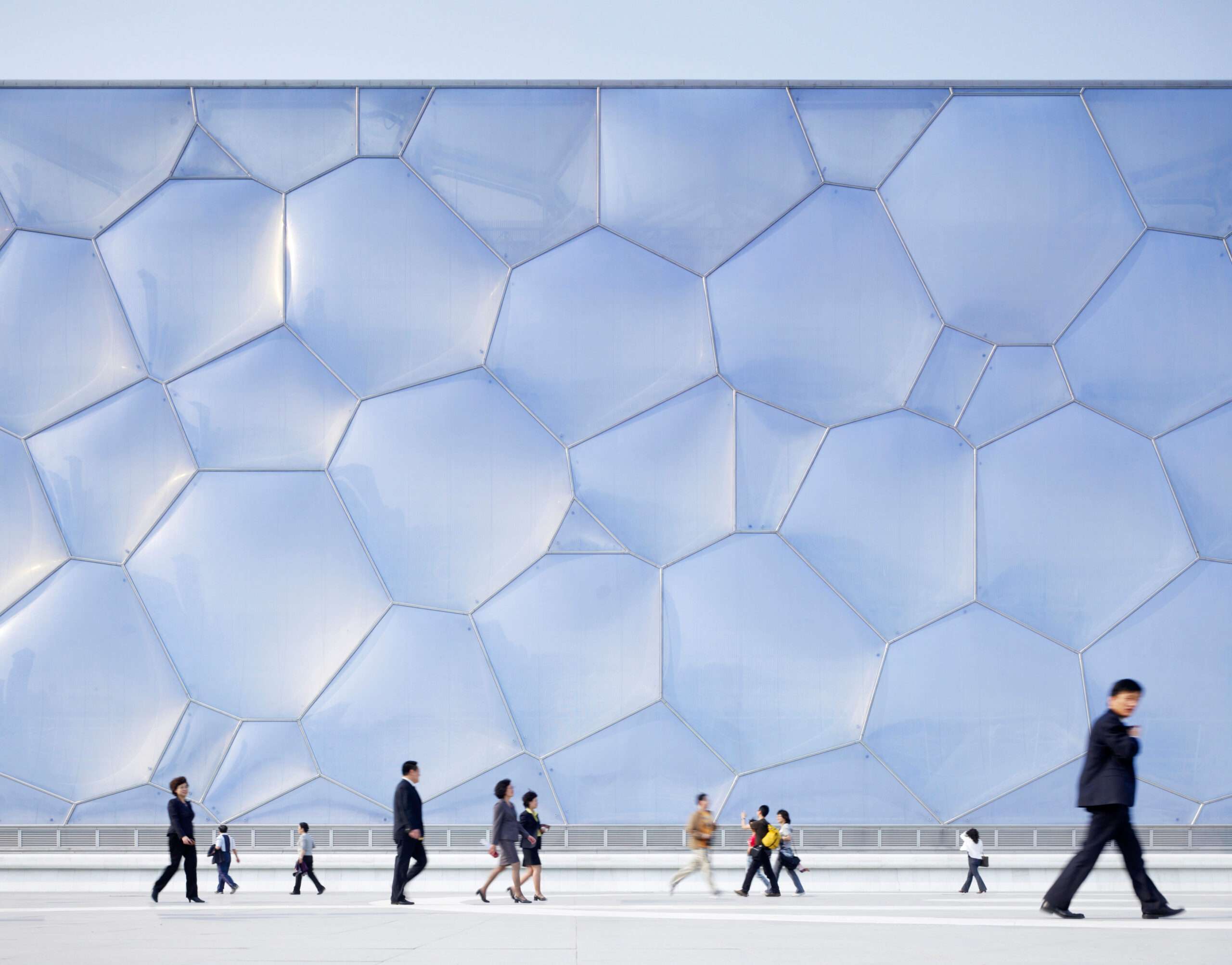
The Water Cube’s façade was inspired by the Weaire–Phelan structure, a mathematically precise pattern that mimics the way bubbles naturally cluster together. This unique geometry was chosen not only for its organic beauty but for its symbolic resonance, capturing the fluidity of water in architectural form.
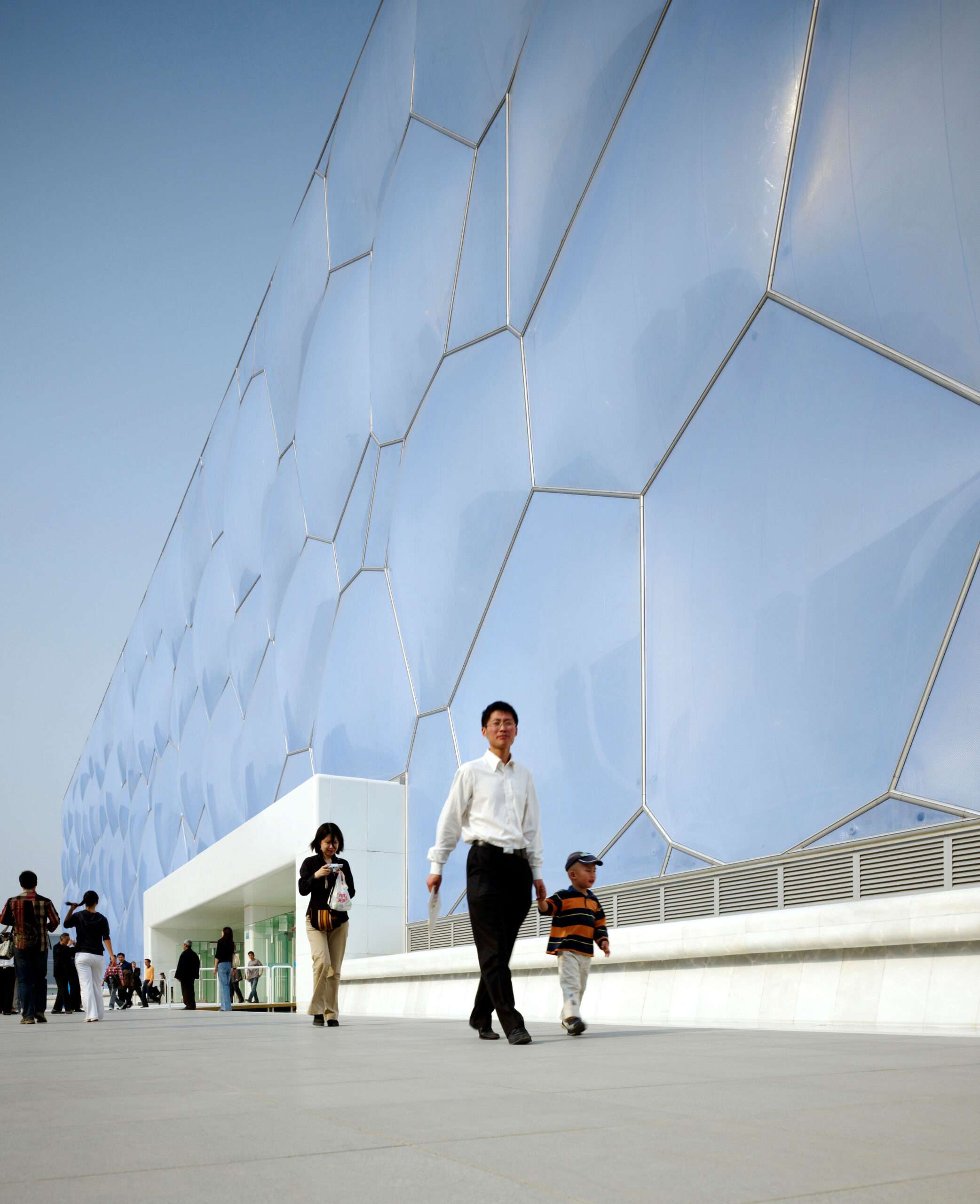
The result is a structure made up of 4,000 individual ETFE cushions in 15 different sizes, some spanning more than 9 meters wide. These cushions are supported by a custom steel frame, yet the entire envelope remains remarkably lightweight – a feat made possible only through the use of ETFE.
Visual Journey
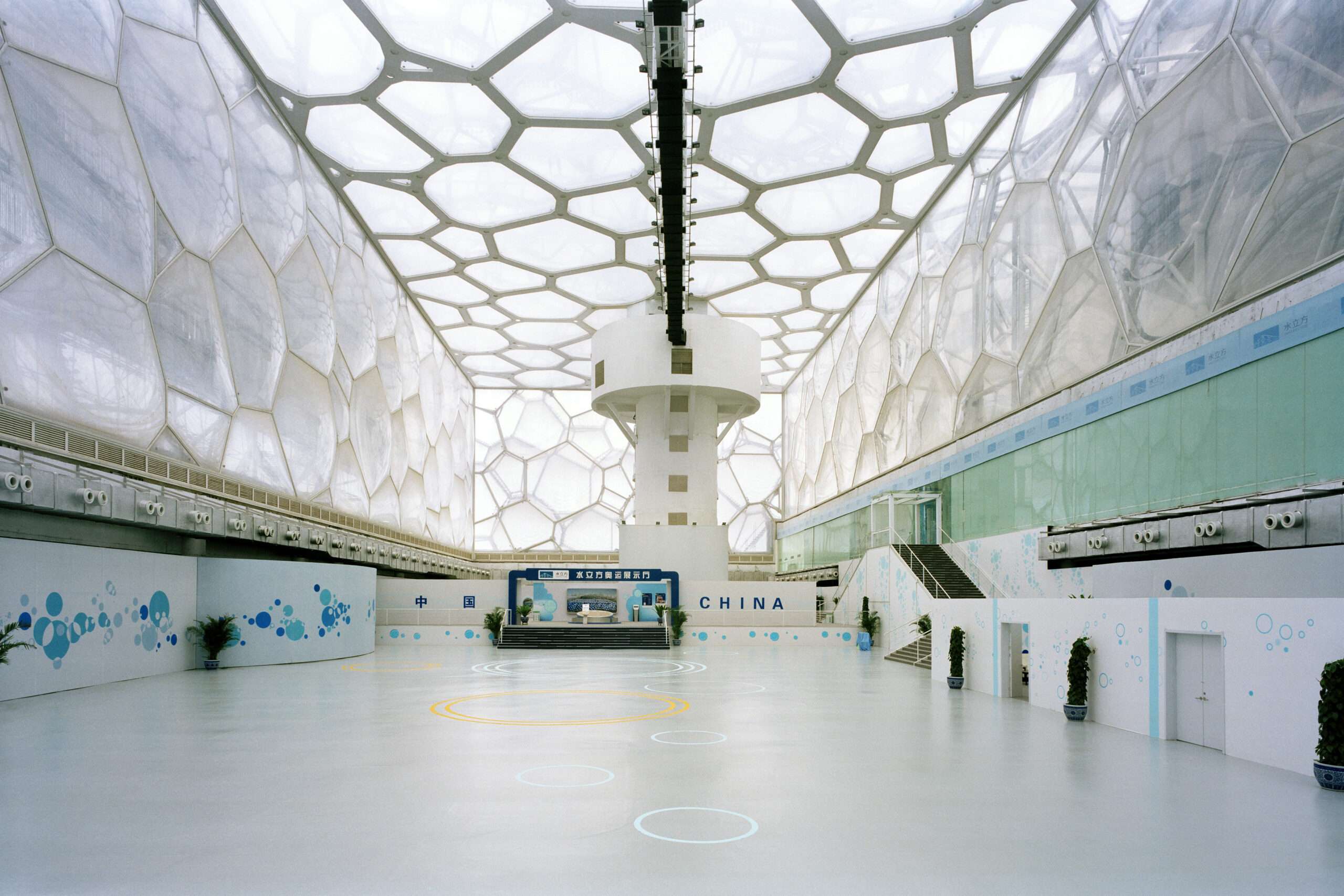
The Watercube is used as a multi-sports facility today.
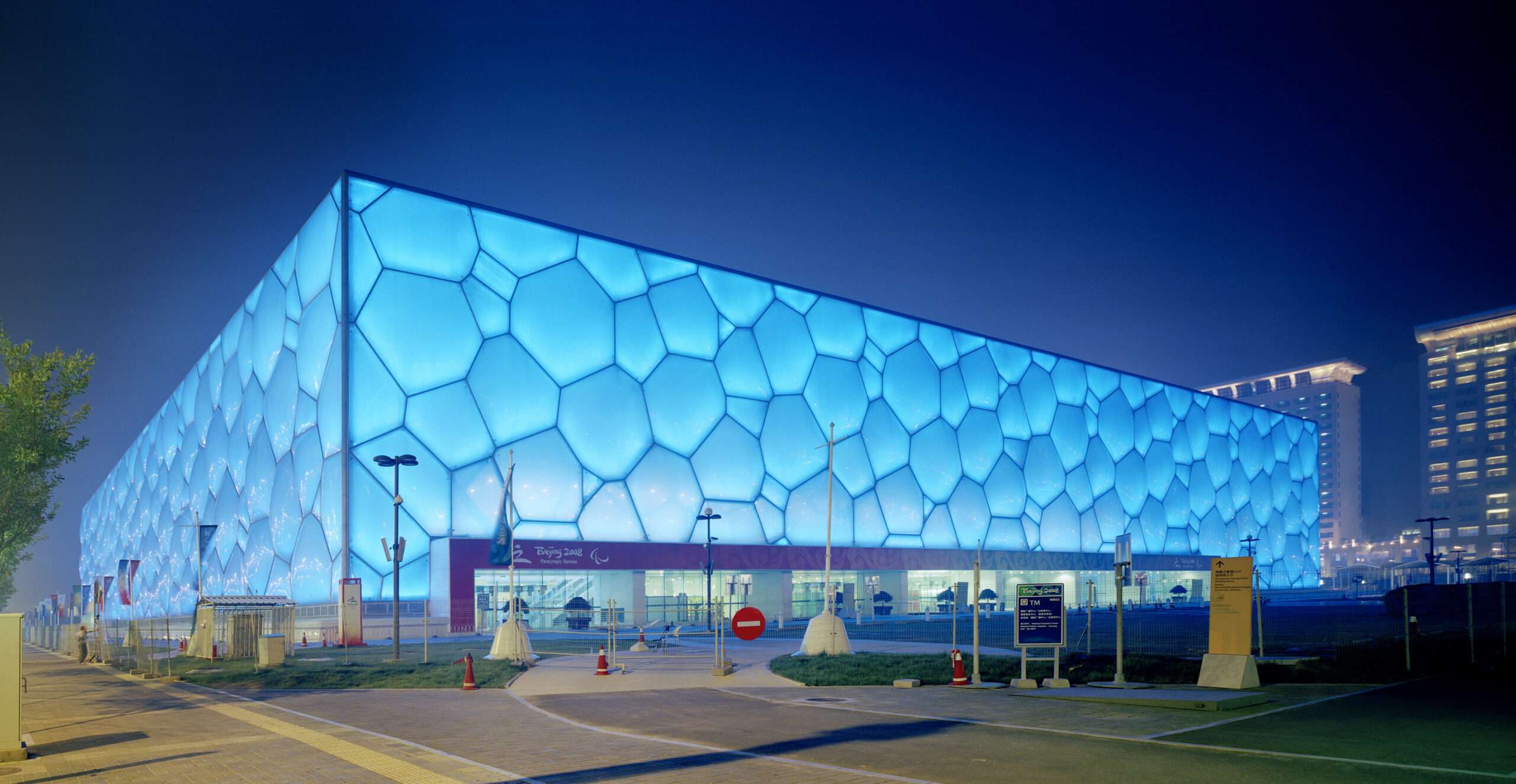
Beautiful illumination of the ETFE facade.
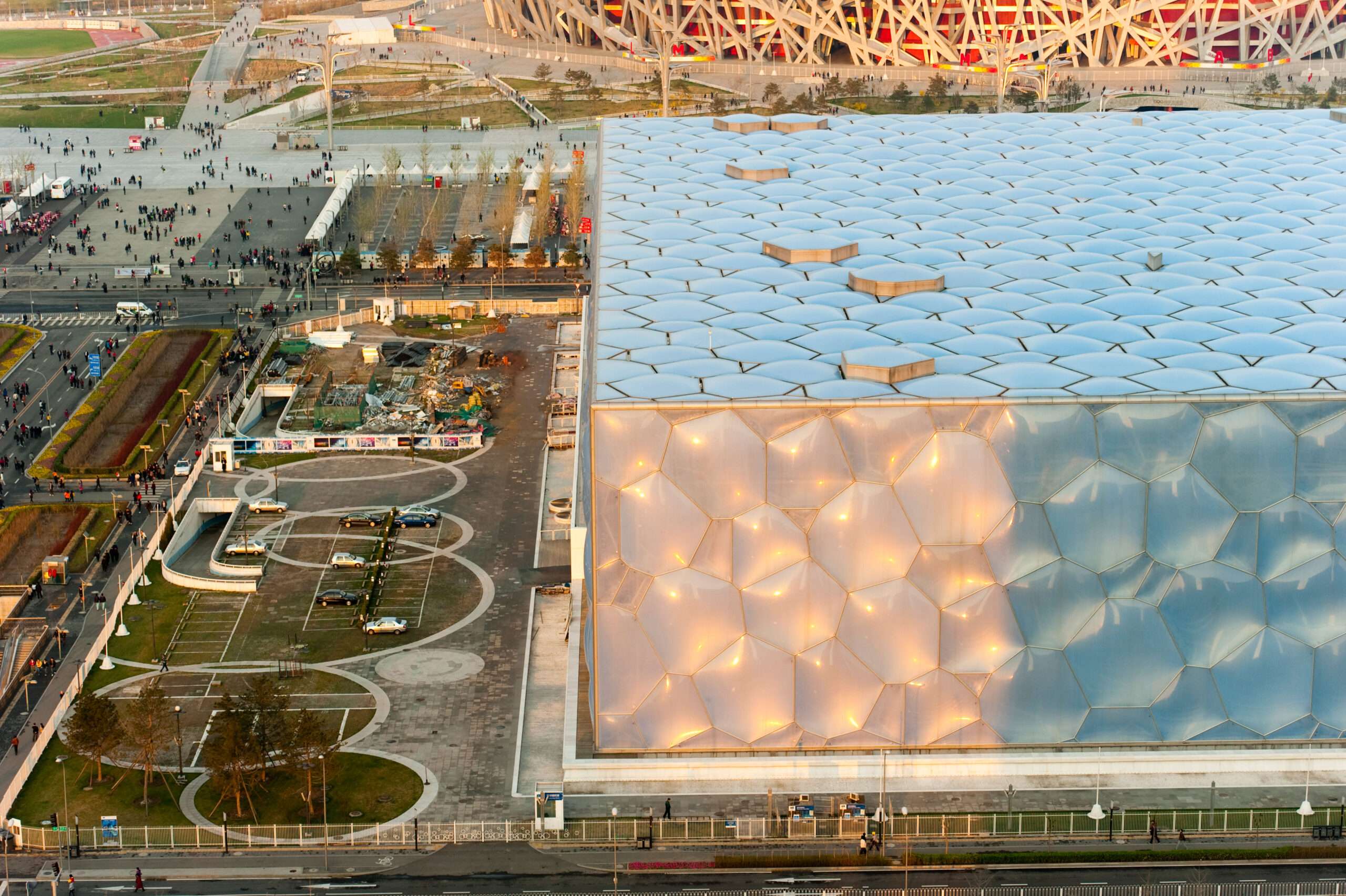
Thee full scale of the project: Over 100,000 m² of ETFE.
Click on the pictures to see the full size
Why ETFE Was the Only Material for the Job
The choice of ETFE was not aesthetic alone, it was essential. Traditional glass or polycarbonate panels could not accommodate the irregular, double-curved shapes needed to replicate the soap-bubble geometry. ETFE, on the other hand, offered everything the project demanded:
- Extreme flexibility for complex free-form surfaces
- Ultra-light weight, reducing structural demands and material usage
- High transparency to allow natural daylight into the space
- Thermal performance through multi-layer, air-filled cushions
- Resistance to UV, pollution, and corrosion – ideal for long-term public use
- Minimal maintenance needs, even in harsh urban conditions
In short, ETFE was not a design option, it was the design enabler.
A Structure That Performs as Beautifully as It Looks
Beyond its iconic appearance, the ETFE envelope plays a critical role in the Water Cube’s performance. The cushion system insulates the building envelope, improves energy efficiency, and creates a stable indoor climate, essential for a high-use aquatics center.
On sunny days, up to 55% energy savings are achieved thanks to the translucent skin, and around 20% of incoming solar energy is reused to heat the interior and swimming pools. The building also incorporates energy recovery systems that harness waste heat to maintain comfortable temperatures in colder months. These sustainable features made the Water Cube an early leader in eco-conscious sports architecture, well ahead of its time.
Global Collaboration, Local Identity
Located in Beijing’s Olympic Green, the Water Cube had to meet the highest international standards while reflecting Chinese identity and cultural values. The design was developed by a global team of architects and engineers.
Whether viewed up close or from a distance, the building’s soft translucency, dynamic geometry, and vibrant illumination give it a presence unlike any other. By night, the internal lighting transforms the building into a softly glowing landmark.
Setting a Benchmark for ETFE Architecture
Covering more than 100,000 square meters, the Water Cube remains the largest ETFE project ever built. It is a global benchmark not only in sports design, but in the use of ETFE as a primary architectural material. Its success reshaped the global conversation about what ETFE can achieve, not just as a membrane, but as a tool for narrative, identity, and sustainability in architecture.
Today, the National Aquatics Center continues to serve as a multi-functional venue, hosting everything from swimming competitions to public events and cultural exhibitions. Its adaptability is a direct result of its original material and design choices and proofs that visionary architecture must also be future-ready.
ETFE in China and Beyond: Unlocking New Possibilities
The Water Cube demonstrates that ETFE is more than a roofing material. It’s a medium for creativity, technical precision, and sustainable performance. It enables buildings to go beyond the expected and become art, infrastructure, and experience in one.
If you’re planning a high-profile venue, stadium, or public structure, ETFE opens the door to lightweight forms, bold geometries, and high-performance facades that transform the user experience.
Let’s bring your next landmark to life! Get in touch today.
Media Copyrights
© Alamy, Werner Huthmacher